

The nuances of rehabilitation: what do you need to know?
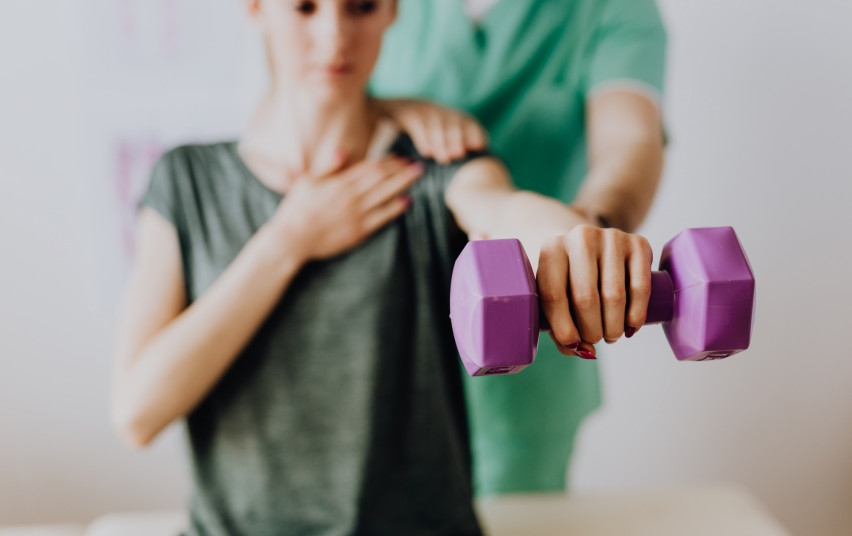
The health insurance funds and rehabilitation facilities receive various comments from the patients regarding medical rehabilitation services. Doctors and specialists of the health insurance funds answer questions that concern residents.
It is recommended not to delay
Medical rehabilitation procedures shall be started as soon as possible after a consultation with a doctor of physical medicine and rehabilitation (PMR), not later than within 21 day, unless the doctor determines and records that they shall be started later, for instance, after an injury, when there is a need to wait until the fracture is healed etc. The patient may delay a prescribed procedure only due to justified reasons (other disease, death of a close person etc.). If the patient cannot start rehabilitation on time due to personal circumstances (work trip, exams etc.), he must sign a waiver, that he is not undergoing rehabilitation, and later, if there is a need, a repeated consultation of a PMR doctor may be provided to him and the need for rehabilitation is reassessed.
PMR physician of Panevėžys Centre for Physical Medicine and Rehabilitation, a member of the Board of Lithuanian Society of Physical Medicine and Rehabilitation Physicians, Laura Sabienė notices that quite often the patients, who arrived for a consultation regarding medical rehabilitation, require massage procedures, because they think it is the most important means of treatment. The doctor emphasizes: efficient medical rehabilitation is a complex application of rehabilitation methods (kinesitherapy, occupational therapy, physiotherapy, therapeutic massage etc.), which is prescribed by a PMR physician following diagnosis indicated in the referral, degree of the disorder of biopsychosocial functions and disease severity, but not according to the patient’s preferences.
L. Sabienė states that in order to achieve the best possible results of treatment, patients should complete all the prescribed procedures and it is necessary to inform about cancellation of a treatment course or non-attendance of the procedure as failure to do so will result in longer waiting lists for other patients. Queues are also formed when the patients postpone the start of initial rehabilitation for personal reasons (annual leave, trips) and a course of treatment cannot be started on time.
Services are not only based on the diagnosis
Medical rehabilitation is prescribed in presence of disordered biopsychosocial functions and, most often, it is started from initial ambulatory medical rehabilitation, when up to 25 rehabilitation procedures (kinesitherapy, occupational therapy, physiotherapy, massage) or initial inpatient rehabilitation with individual rehabilitation procedures (kinesitherapy, occupational therapy, physiotherapy, massage, psychotherapy, clinical speech therapy, etc.), while still being in the hospital, are prescribed.
In some cases, the patient may be referred to a medical rehabilitation facility without initial ambulatory or initial inpatient medical rehabilitation.
The patients often are mistaken in thinking that ambulatory rehabilitation shall be necessarily prescribed after initial ambulatory rehabilitation. However, the need for ambulatory supervision is established by a PMR doctor, who assesses the patient’s condition after initial rehabilitation. And only if initial rehabilitation has not produced a sufficient result, but further improvement in functional condition is still expected, ambulatory rehabilitation can be prescribed.
Inpatient rehabilitation may be prescribed to the patients after very serious illnesses and injuries, with severe impairment of biopsychosocial functions, disordered function of mobility and self-care. Inpatient rehabilitation is provided only after inpatient treatment, except in cases where the patient needs to be prepared for prosthetics, when rehabilitation services are provided for children, for mental and behavioural disorders, or after day-surgery services, and in other exceptional cases.
Doctor L. Sabienė points out that patients should not require rehabilitation simply because they have been diagnosed with a certain disease, as the need for rehabilitation is based on functional impairment, not on a specific disease or disorder – for example, a long-standing herniated disc in the spine, arthrosis of the joints, etc.
It is important to know that a patient has the right to choose a rehabilitation facility. If the patient wishes to receive outpatient rehabilitation services in a sanatorium, he/she must remember that meals and accommodation are not reimbursed in this case, but he/she is not obliged to purchase them, i.e. he/she can only come for rehabilitation procedures.
Rehabilitation can also be used for several conditions
Rimantė Venclovienė, Advisor to the Services Management Division of the National Health Insurance Fund under the Ministry of Health (NHIF), notes that rehabilitation services are not separated by individual disease codes, but rather they are provided on the basis of an assessment of all the impairments of biopsychosocial functions, and can be applied to several problem areas at the same time. For example, if a patient comes for rehabilitation of a spinal nerve injury and a PMR doctor determined limited knee joint movement during the consultation, rehabilitation procedures are applied to both areas. The scope of the procedures is decided by the PMR doctor after assessing the patient’s state of health, illnesses he/she has been diagnosed with and existing functional disorders.
It is important to note that initial outpatient rehabilitation services are not based on the diagnoses, but on the assessment of functional disorders. During one treatment episode, the Compulsory Health Insurance Fund (CHIF) pays for up to 25 rehabilitation procedures, which are applied to each individual patient.
According to R. Venclovienė, funding for rehabilitation services continues to increase every year. In 2021, EUR 98 million was allocated, last year EUR 114 million, and this year EUR 120 million from the Compulsory Health Insurance Fund (CHIF) has been allocated.
More information on medical rehabilitation can be found here.
(Pexels photo)
The NHIF invites you:
- Read the most important news on Facebook: https://goo.gl/ML8SqJ
- See recent pictures on Instagram: https://goo.gl/tXvpXr
- Watch comprehensive and funny videos on Youtube: https://goo.gl/BPBep2
- Follow exclusive infographics and more in Flickr: https://goo.gl/Hsyhq4
- Follow us on LinkedIn: https://tinyurl.com/2sxfh66j
- Your questions are welcome by email [email protected] or phone +370 5 232 2222