

The health insurance funds will reimburse spectacle lenses for all pre-school children
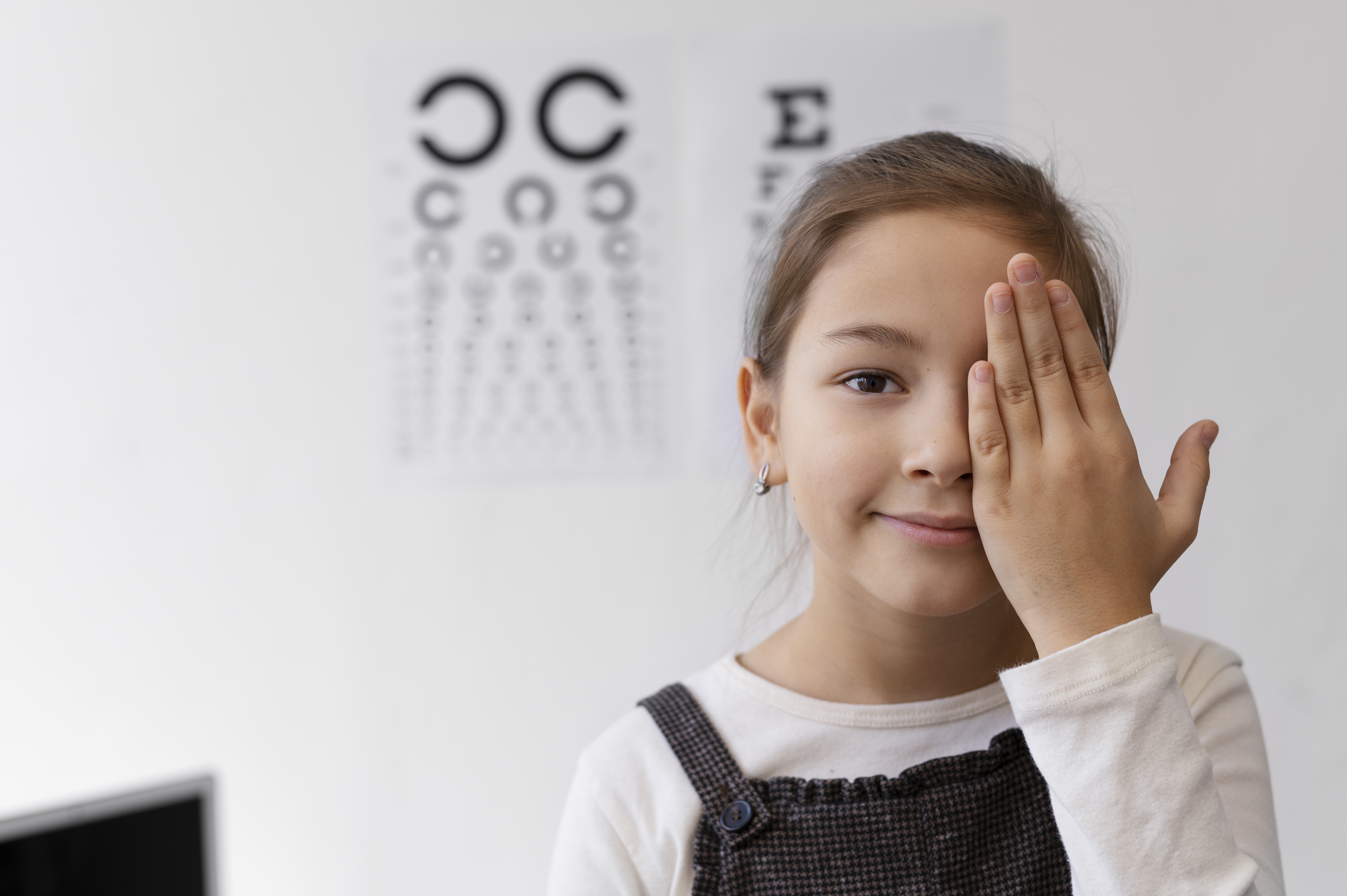
Changes to the reimbursement of spectacle lenses will soon come into force. As of 1 April, all children up to the age of 7 will have their spectacle lenses reimbursed by the Compulsory Health Insurance Fund (CHIF), reports the National Health Insurance Funds. An additional EUR 1 million has been allocated for this purpose.
Until now, reimbursable spectacle lenses for visual impairment have been prescribed for children whose best corrected visual acuity of the better-seeing eye did not exceed 0.5 visual acuity points. For this reason, only a small proportion of Lithuanian children were able to benefit from spectacle lens reimbursement.
„In order to improve children’s vision at an early age and taking into account the possibilities of the Compulsory Health Insurance Fund, the current reimbursement scheme for spectacle lenses is being changed. From now on, the majority of the basic cost of spectacle lenses, up to 70%, will be reimbursed for all children up to the age of 7 years, regardless of their visual acuity.
It is estimated that around 15,000 children in Lithuania may need spectacle lenses, which is why almost one million euros of the CHIF funds have been allocated to reimbursing lenses already this year,” - says Giedrius Baranauskas, Head of the Medical Devices Reimbursement Division of the National Health Insurance Funds (NHIF) under the Ministry of Health.
As before, children with a referral from an ophthalmologist will be reimbursed for a pair of spectacle lenses no more than once a year.
To receive spectacle lenses reimbursed by the CHIF, you must first go to your family doctor, who will issue a referral for an eye consultation. Once the patient’s visual impairment has been diagnosed, this doctor can prescribe the reimbursable spectacle lenses and issue a referral. This referral should then be sent to one of the opticians contracted by the NHIF. A list of these opticians can be found HERE.
Patients may be prescribed reimbursable spectacle lenses (without frames) for a wide range of conditions that affect vision. For example, diseases of the lens, choroid and retina, glaucoma, diseases of the vitreous and eyeball, diseases of the optic nerve and optic tract, diseases of the eye muscles, problems with accommodation and refraction, and corneal transplants.
G. Baranauskas points out that, as before, the full basic cost of spectacle lenses will be reimbursed by the CHIF in cases where an ophthalmologist determines that the acuity of the better-seeing patient's eye, with full correction, does not exceed 0.5 visual acuity points. In this case, all children, irrespective of age, and adults will receive 100 % reimbursement for spectacle lenses.
For all patients, the reimbursable base price for regular spectacle lenses with a refractive power of less than or equal to 6.0 spherical diopters and/or less than or equal to 2.0 cylindrical diopters is EUR 95. For complex spectacle lenses with a refractive power greater than 6.0 spherical dioptres and/or greater than 2.0 cylindrical dioptres, the basic reimbursement price is EUR 148.
For adult patients with a doctor’s referral, a pair of spectacle lenses is reimbursed no more than once every two years.
(Freepik photo)
The NHIF invites you:
- Read the most important news on Facebook: https://goo.gl/ML8SqJ
- See recent pictures on Instagram: https://goo.gl/tXvpXr
- Watch videos on Youtube: https://goo.gl/BPBep2
- Follow exclusive infographics and more in Flickr: https://goo.gl/Hsyhq4
- Follow us on LinkedIn: https://tinyurl.com/2sxfh66j
- Your questions are welcome by email [email protected] or phone +370 5 232 2222