Why is priority inpatient rehabilitation considered one of the most important services?
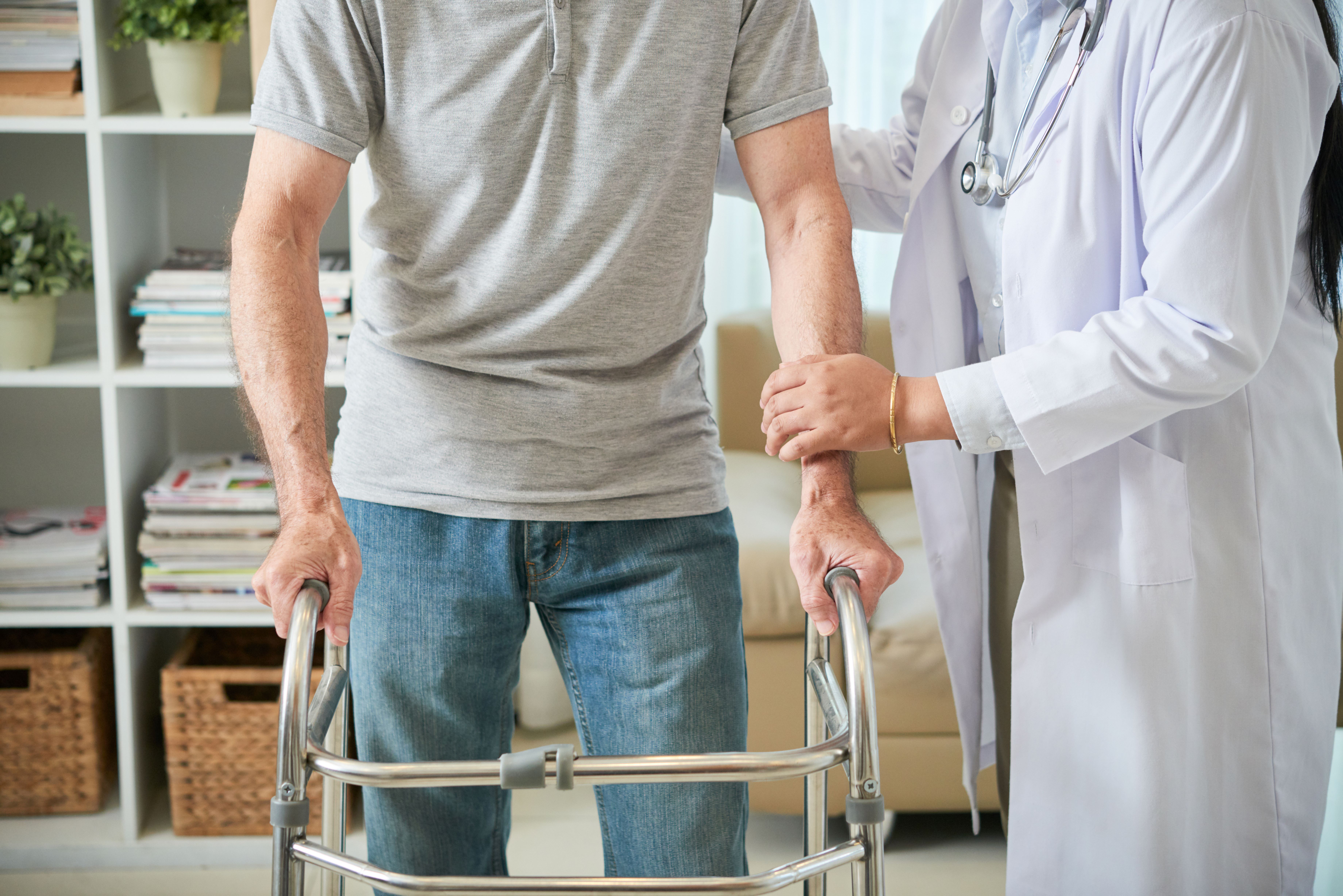
We often hear that one or another healthcare service is considered a priority. But what does such a status actually mean, and why is it not granted to all services? One of them is priority inpatient medical rehabilitation, which for patients can determine not only faster recovery but also the opportunity to regain lost independence. Why this type of rehabilitation is considered particularly important is explained by Gediminas Toleikis, an advisor at the Service Reimbursement Division of the National Health Insurance Fund.
Prescribed after serious illnesses, injuries, or surgeries
Priority inpatient medical rehabilitation is prescribed after serious illnesses, injuries, or surgeries. Its aim is to help a person restore functions that have been impaired due to illness or injury, regain independence, improve quality of life, and return to normal life as quickly as possible.
This type of rehabilitation is especially important, for example, after a stroke or a heart attack. After a stroke, it is particularly crucial to restore impaired functions such as movement, speech, balance, and others. After a heart attack, rehabilitation helps strengthen the cardiovascular system, safely restore physical activity, and reduce the risk of recurrent cardiac problems.
This rehabilitation is also prescribed after joint replacement surgeries, complex bone fractures, such as pelvic bone fractures, long bone fractures, or fractures in multiple body regions.
In such cases, the aim is to reduce pain, restore mobility, strengthen muscles, and help the patient safely return to normal daily activities.
There are also other diagnoses for which both children and adults may be prescribed priority inpatient medical rehabilitation.
Referral is issued in the hospital
A few days before the patient is discharged from the hospital, rehabilitation options and further organization of these services should be discussed with the patient or his/her relatives.
While the patient is still being treated in the hospital, he/she is also consulted by a physical medicine and rehabilitation (PMR) physician. After assessing the patient’s condition and the need for medical rehabilitation, the specialist provides recommendations to the treating physician. If rehabilitation is required, the treating physician issues an electronic referral for priority inpatient medical rehabilitation.
The patient is helped to choose a suitable rehabilitation facility
The doctor must inform the patient about which healthcare institutions provide necessary medical rehabilitation services. The patient can choose the rehabilitation facility where he/she will receive required services. In some cases, rehabilitation may also continue in the same healthcare institution where the patient received inpatient treatment.
With the patient’s consent, the responsible hospital staff member coordinates the patient’s arrival time with the administration of the rehabilitation facility and ensures the organization of the necessary assistance.
If there are no available places in the patient’s chosen facility during the recommended start period of rehabilitation, the patient is registered at another rehabilitation facility where the required services can be provided at the earliest possible time.
The patient must arrive at the medical rehabilitation facility at the time specified by the physical medicine and rehabilitation (PMR) physician. If, due to important reasons, the patient cannot arrive at the specified time, they must independently arrange a new admission date, but no later than 2 months from the date the referral was issued.
What services can be provided?
After hospital treatment, the period of organism recovery starts. For this, medication or rest alone is not always enough – consistent lifestyle changes, patient motivation, and active participation in the rehabilitation process are also important.
In a rehabilitation facility, the patient receives complex care: physiotherapy, kinesitherapy, massage, occupational therapy, and other procedures are applied, as well as psychological and social support and dietary treatment. If necessary, orthopedic and assistive devices may be selected and adapted for the patient, and the patient is taught how to use them.
An important part of rehabilitation is educating the patient and their relatives
In a medical rehabilitation facility, specialists provide patients and their family members with knowledge on how to continue taking care of health after treatment, what lifestyle changes to apply in daily life, for example how to move safely, perform recommended exercises, and use prescribed assistive devices. Relatives are also instructed on how to help the patient at home and support recovery process. Such education helps the patient not only achieve better rehabilitation results but also gain confidence.
How many services are provided and how much is spent?
Last year, more than 30,000 priority inpatient medical rehabilitation services were provided in healthcare institutions that have contracts with the health insurance fund to patients insured under compulsory health insurance. More than 62 million euros from the Compulsory Health Insurance Fund were used to pay for these services. All priority inpatient rehabilitation services provided to patients were covered by the fund’s resources.
The NHIF invites you:
- Read the most important news on Facebook: https://goo.gl/ML8SqJ
- See recent pictures on Instagram: https://goo.gl/tXvpXr
- Watch videos on Youtube: https://goo.gl/BPBep2
- Follow exclusive infographics and more in Flickr: https://goo.gl/Hsyhq4
- Follow us on LinkedIn: https://tinyurl.com/2sxfh66j
- Your questions are welcome by email [email protected] or phone +370 5 232 2222/public/canonical/1775195118/14094/Ill%20woman%20coughing%20Getty%20Images.png