

The health insurance funds: changes to the reimbursement of orthopaedic equipment
As of 1 April, orthopaedic technical equipment will be reimbursed under new conditions. The aim is to improve the quality and accessibility of orthopaedic products for patients. The requirements for manufacturers and doctors’ consultations are stricter, and more attention is given to proper information for patients. The Compulsory Health Insurance Fund provides a substantial amount of funding to implement the innovations.
Adults will be reimbursed on the same terms
Previously, only patients with rheumatoid arthritis and diabetes were reimbursed for complex orthopaedic footwear every 6 months. From 1 April, orthopaedic footwear will be reimbursed on the same terms for all people with disabilities.
“From now on, two pairs of custom-made complex orthopaedic footwear will be reimbursed every six months for adult patients, regardless of their diagnosis. The base price of the first pair will be 100% reimbursed, while the base price of the second pair produced during the year will be 70% reimbursed. We estimate that this will require an additional EUR 900,000 per year from the Compulsory Health Insurance Fund”, – says Giedrius Baranauskas, Head of the Medical Devices Reimbursement Division of the National Health Insurance Fund (NHIF) under the Ministry of Health.
As previously, in the first year, the basic price of both pairs of orthopaedic footwear will be 100% reimbursed.
Another important innovation is that orthopaedic footwear for diabetic foot complications can now be prescribed for the first time by an orthopaedic traumatologist, a surgeon, a physical medicine and rehabilitation doctor, and repeatedly by an endocrinologist. This will significantly shorten the patient’s access to orthopaedic products reimbursed by the Compulsory Health Insurance Fund (CHIF).
According to the NHIF, a total of EUR 3.6 million has been allocated this year from the CHIF for the reimbursement of custom-made complex orthopaedic footwear, which is almost EUR 1.1 million more than last year.
Renewed conditions for children
From April, revised indications for prescribing custom-made orthopaedic footwear and shoe inserts come into force.
Reimbursable foot inserts for congenital or acquired flatfoot and other foot deformities will now be available for children from the age of 7. However, children aged 4 to 7 will be able to receive foot inserts after plaster casts, after surgery on the foot or lower leg, when the foot is rigid or has certain symptoms, and for neuromuscular diseases.
Similar conditions will apply to custom-made children’s orthopaedic footwear. They will be available for children from the age of 7. Children under 7 will also be eligible for orthopaedic footwear reimbursed by the CHIF following plaster casts, surgery on the foot, lower leg or for neuromuscular diseases.
Children with cerebral palsy, hemiplegia, tetraplegia, rheumatic diseases, polyarthropathy, clubfoot (Talipes equinovarus), arthrogryposis or lymphoedema will not be affected by the conditions for the prescription of custom-made complex orthopaedic footwear.
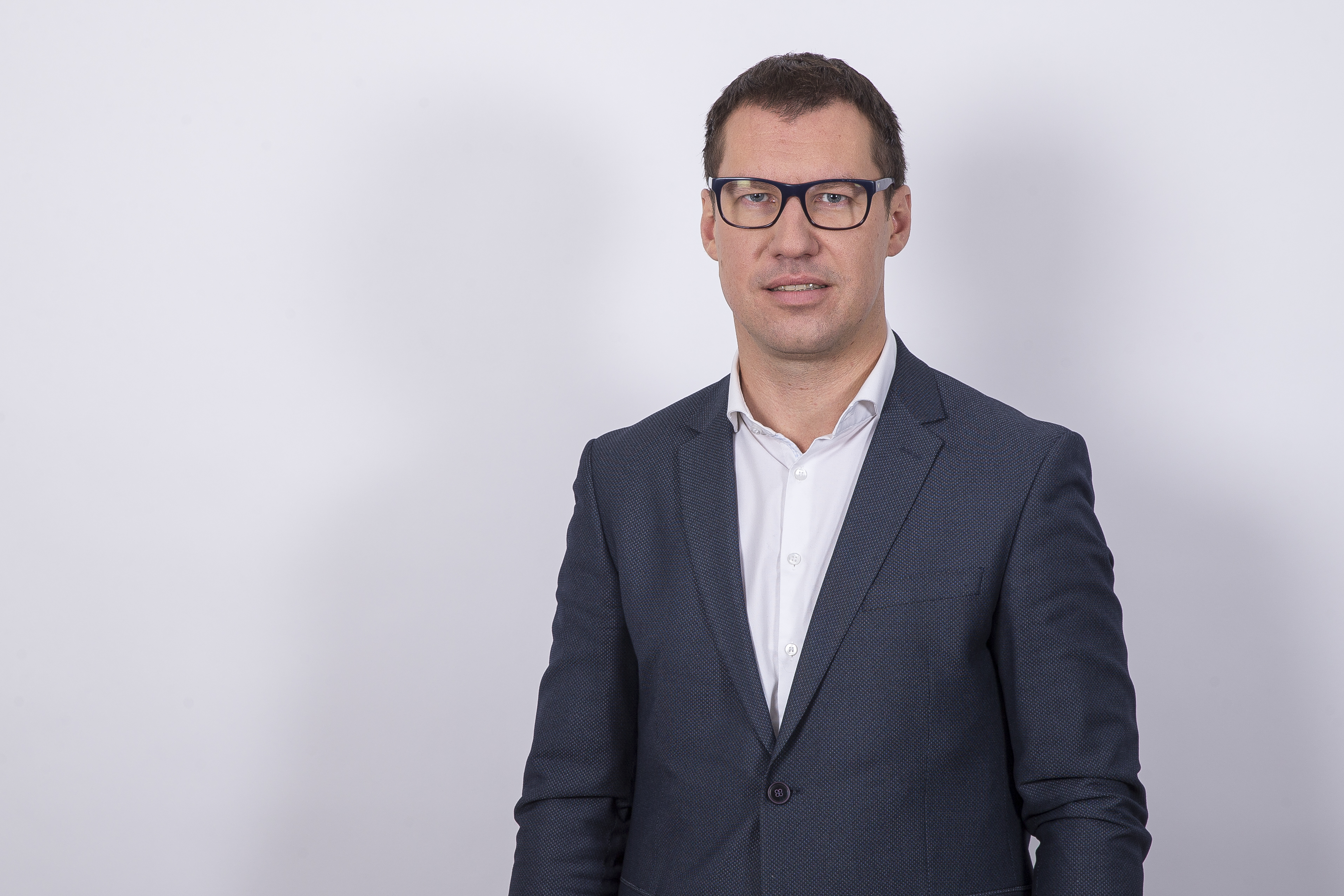
Giedrius Baranauskas, Head of the Medical Devices Compensation Division of the National Health Insurance Fund under the Ministry of Health (photo by NHIF/BNS)
Stricter requirements
According to G. Baranauskas, last year, during the control procedures carried out by the specialists of the health insurance funds, it was noticed that doctors do not always thoroughly examine patients when providing remote consultations on prescribing orthopaedic footwear. Therefore, it is now established that all consultations by doctors for the prescription of orthopaedic technical devices must be carried out only by contact.
Another innovation is that orthopaedic companies or economic operators will now be obliged to apply premiums to partially reimbursed orthopaedic technical appliances or medical devices.
“It has been reported that some orthopaedic companies apply lower or no premiums to partially reimbursed orthopaedic supplies. However, as representatives of organisations uniting people with disabilities note, the premiums discipline patients, encourage them to choose manufacturers more responsibly and to pay more attention to the quality of these devices”, – explains G. Baranauskas.
In addition, according to the specialist, orthopaedic companies and economic operators will now have to provide the NHIF with copies of documents relating to the adjustment, repair, replacement and after-sales service of an orthopaedic technical appliance or medical device. This is intended to prevent possible cases of misuse.
According to G. Baranauskas, there will be innovations in this field next year as well, which is why all orthopaedic companies producing insert footwear and orthopaedic footwear need to prepare for a qualitative leap in 2025.
“From next year, all orthopaedic companies will be subject to a new requirement: both foot inserts and orthopaedic footwear will have to be 3D scanned and uploaded to the NHIF’s Orthopaedics and Medical Devices Information System. The aim is to ensure the quality of orthopaedic footwear and foot inserts, to improve corporate control and to meet patients' requests for information on the performance of the products,” – said the representative of NHIF.
More information for patients
Prosthetic limbs can be made and fitted for patients by orthopaedic companies with orthopaedic technologists trained for the job and with a stamp number. In order to provide disabled people with more detailed information on the companies that manufacture limb prostheses and to remind them of the possibility to choose an orthopaedic company, information on orthopaedic technologists working in orthopaedic companies will be published on the website of the Health Insurance Funds. This information will have to be provided to the NHIF by the orthopaedic companies themselves.
Patients who have received a notification from the NHIF about the possibility of ordering a new prosthetic limb will also be given more detailed information about the choice of orthopaedic company.
According to G. Baranauskas, in order to reduce the administrative burden on orthopaedic companies, the NHIF plans to digitise the process of submitting reports containing the part numbers of prosthetic limbs to the Orthopaedics and Medical Device Information System. Therefore, from now on, orders for limb prostheses will only be placed once the limb prosthesis part number has been confirmed in the system.
(Piktochart photo)
The NHIF invites you:
- Read the most important news on Facebook: https://goo.gl/ML8SqJ
- See recent pictures on Instagram: https://goo.gl/tXvpXr
- Watch videos on Youtube: https://goo.gl/BPBep2
- Follow exclusive infographics and more in Flickr: https://goo.gl/Hsyhq4
- Follow us on LinkedIn: https://tinyurl.com/2sxfh66j
- Your questions are welcome by email [email protected] or phone +370 5 232 2222