

The health insurance fund will provide a 33 million injection to reduce queues
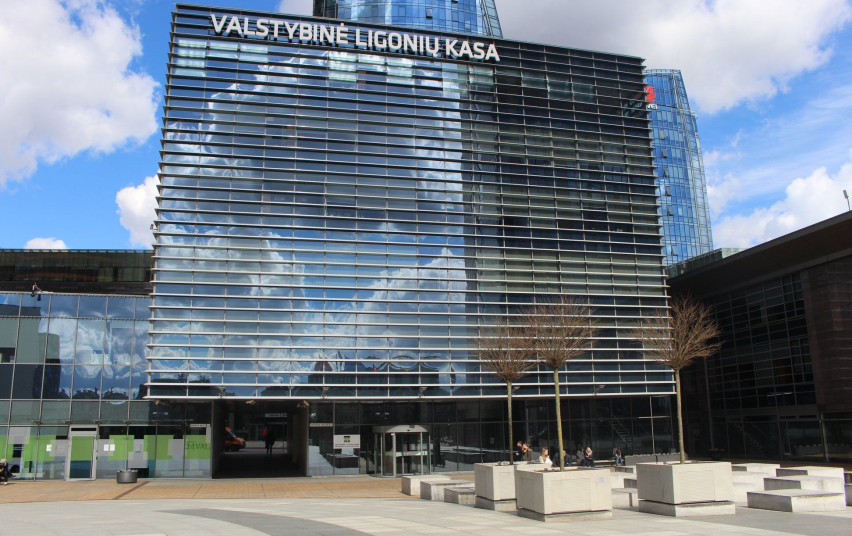
Supplementary agreements to improve access to services have been signed between the Territorial Health Insurance Fund and more than twenty medical institutions in the country. These agreements commit the institutions to provide more services to patients in those institutions with the largest waiting queues. Meanwhile, in their agreements, the Health Insurance Funds have confirmed that they will create all the conditions for the breakthrough by providing the necessary additional funding. The annual need for the Compulsory Health Insurance Fund for this purpose is estimated to be EUR 33.6 million.
During the coronavirus pandemic, many health institutions experienced long waiting queues for services, and even today, in many areas, service delivery has not caught up with pre-pandemic levels. This is a challenge not only for Lithuanian health systems, but also for health systems around the world, which are constantly looking for ways to effectively reduce queues at health institutions.
In the view of Gintaras Kacevičius, Director of the National Health Insurance Fund (NHIF) under the Ministry of Health, non-standard situations require non-standard solutions, which is why a measure has been taken that has never been taken in the history of the country – the country's medical institutions have been asked by agreements to commit themselves to reducing waiting queues for services, for which they receive additional payment from the health insurance funds.
“The aim of the Supplementary agreements is to financially support medical institutions to improve access to healthcare services paid for by the Compulsory Health Insurance Fund and to ensure that these services are provided free of charge to patients - without any additional charges or conditions not foreseen by the legal provisions. We hope that the additional funding will allow medical institutions to significantly increase the number of services for which they face the long waiting queues,” said G. Kacevičius.
The majority of medical institutions have committed in their agreements to increase access to consultations with medical specialists. The total need for funds exceeds EUR 14 million. The agreements also provide additional funds of more than EUR 5 million each for day hospitals, day surgery services and active and long-term care services. In addition, some institutions have foreseen in the agreements to increase the provision of nursing and palliative care services, as well as inpatient palliative care and emergency care services, etc.
According to NHIF calculations, the additional funding secured by the agreements will allow the country's medical institutions to provide an additional 200,000 specialist consultations, 1,300 joint replacement surgeries, 37,000 inpatient day-care services and 7,500 day-surgery services.
The biggest agreements have been signed between the biggest medical institutions, such as Hospital of Lithuanian University of Health Sciences Kauno klinikos, Vilnius University Hospital Santaros klinikos, Republican Vilnius University Hospital, Panevėžys Republican hospital, and other institutions. Some regional institutions, such as Druskininkai Hospital, S. Kudirka Hospital of Alytus County, Varėna Primary Health Care Centre, and some outpatient clinics, such as Centro poliklinika (en. Centre outpatient clinic) in Vilnius, Antakalnis outpatient clinic, Šeškinė polyclinic, etc., have also planned to increase the number of services. Some private medical institutions have also signed the agreements.
“This is the first time that agreements of this kind have been signed between Health Insurance Funds and medical institutions, so we really appreciate the commitment and efforts of each institution that has made these agreements to find ways to provide more of the services that their patients are waiting for the most. We hope that this step will encourage other institutions to look for certain management solutions and human resources in order to provide their patients with the services they need much faster”, says the Director of the NHIF.
The agreements between Health Insurance Funds and medical institutions to improve access to services will remain in force for this year. During this period, the additional services provided by the institutions will be paid for by the dedicated NHIF funds.
(BNS photo)
The NHIF invites you:
- Read the most important news on Facebook: https://goo.gl/ML8SqJ
- See recent pictures on Instagram: https://goo.gl/tXvpXr
- Watch comprehensive and funny videos on Youtube: https://goo.gl/BPBep2
- Follow exclusive infographics and more in Flickr: https://goo.gl/Hsyhq4