

Restructuring Emergency Medical Service: what changes to expect?
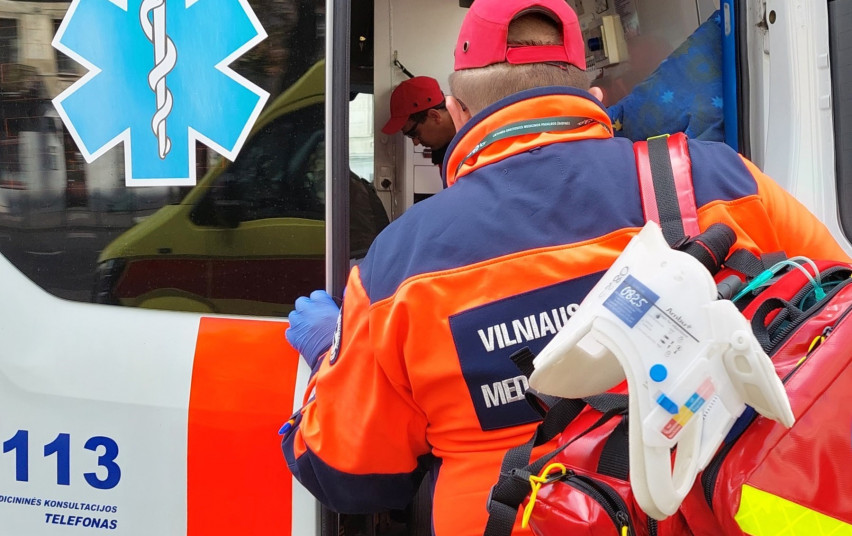
A new national Emergency Medical Service (EMS) was launched as of 1 July of this year, it merged 48 independent EMS stations that previously operated in Lithuania. Implemented reorganization will allow to optimize administration costs and to ensure that more funds are allocated to EMS teams and equipment necessary for their work. Also, to ensure consistently high-quality emergency medical services throughout Lithuania.
“With new operating national service, we move towards modern service firmly and confidently. It will ensure high-quality and timely emergency medical services to residents and decent and safe working conditions for employees,” Viktorija Buzytė, advisor of the Primary Health Care and Nursing Division of
Personal Health Care Department under the Ministry of Health (MOH), says.
Nerijus Mikelionis, Director General of the new EMS, states that the main purpose of the service is a consistently high-quality service to all the patients in Lithuania: “Regardless of the place where a man called EMS, he must receive equal and standardized service of high competence and quality. Employees shall have the same competencies and qualification as well as equal opportunities for further training. They must have ability to use the same, standardized and up-to-date work equipment.”
According to the interlocutor, reorganization was started after the assessment of the gap of EMS quality in different regions of the state. Having merged different providers of emergency aid into one organization, costs for administration and management will be optimized. This will ensure that more funds are allocated to EMS teams and for the purchase of modern equipment.
Prior to reorganisation, the issue of different pay systems in different institutions was particularly sensitive. Reorganization will ensure that employees in the same position receive the same pay regardless of where they work.
One more important goal of reorganization – renewal of a car fleet. “Before reorganisation, we faced a problem of an ageing car fleet and the need to renew it as soon as possible. The Ministry of Health intends to allocate EUR 40 million. We expect to renew a car fleet within five years. Standardization of the equipment in EMS cars is important for the provision of services as well,” N. Mikelionis mentions.
According to the head of EMS, reorganization did not cause any inconveniences to residents. “Short emergency numbers remained the same. There are two ways to reach an EMS control room. Common emergency telephone is 112 and direct number of EMS control room – 113. Everything remains the same,” head of EMS noted. 112 emergency number can be called in cases of a threat to health or life, and 113 EMS consultation number can be used for the advice or non-urgent medical information when there is no major health risk.
The interlocutor reminded that before calling a short number, it is important to assess whether urgent help is really needed in a particular situation: “The function of EMS teams is to provide emergency aid, when a person has an accident – he falls ill seriously or his health condition gets suddenly worse – to provide first aid on arrival at the scene, stabilize patient’s condition and get him/her to the emergency department of a healthcare facility as quickly as possible. In all other cases, we recommend to visit your family doctor.”
Ministry of Health Communication Department
(Photo of EMS Vilnius Division)
The NHIF invites you:
- Read the most important news on Facebook: https://goo.gl/ML8SqJ
- See recent pictures on Instagram: https://goo.gl/tXvpXr
- Watch videos on Youtube: https://goo.gl/BPBep2
- Follow exclusive infographics and more in Flickr: https://goo.gl/Hsyhq4
- Follow us on LinkedIn: https://tinyurl.com/2sxfh66j
- Your questions are welcome by email [email protected] or phone +370 5 232 2222