

Reimbursements for Patients with Diabetes
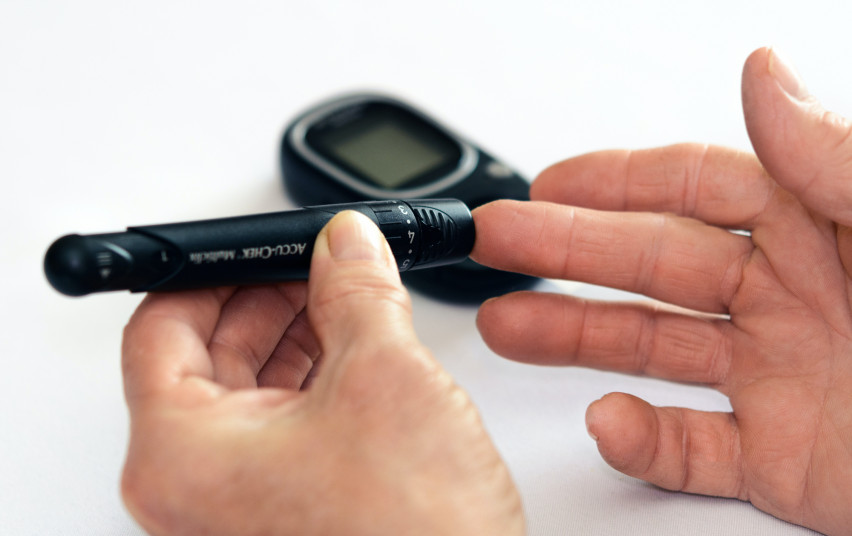
The number of patients with diabetes keeps growing every year. Quite often this diagnosis turns the world upside-down. In commemoration of the World Diabetes Day, the National Health Insurance Fund (NHIF) under the Ministry of Health is reminding of ways to make the life of diabetes patients easier by using the guarantees, offered by the Compulsory Health Insurance Fund (CHIF).
Testing
More than 8 thousand people joined the ranks of diabetes patients over the past three years. According to the Institute of Hygiene, the number of diabetes patients in Lithuania was nearly 150 thousand, more than one thousand of whom have not even reached adulthood. NHIF estimates that more than 135 thousand patients visited their general physician due to diabetes in 2021.
Those, who have been suffering from diabetes for some time, probably already know the numbers and types of testing needed to ensure an efficient control of the disease. Nevertheless, new diabetes patients should know that one of the most common of the necessary tests is the glycosylated haemoglobin test. It helps to assess long-term blood glucose concentration, which is extremely useful for monitoring the course of diabetes treatment. Glycosylated haemoglobin testing is recommended 4 times a year – every 3 months.
The testing is covered from the CHIF funds, thus patients do not need to pay for it themselves. According to NHIF, the number of glycosylated haemoglobin tests last year alone was more than 112 thousand.
Insulin treatment
Since diabetes is caused by a malfunction of the insulin hormone, most patients receive insulin treatment. And while this type of treatment is regarded as making life difficult, insulin pumps, reimbursed by NHIF, make this burden easier. They ensure consistent subcutaneous insulin injections, which help maintain the needed amount of insulin in the body around the clock. As of April this year, the National Health Insurance Fund reimburses insulin pumps for all Type 1 diabetes patients.
There is a growing tendency of people taking the opportunity to rent an insulin pump, reimbursed by CHIF funds every year. In a year before last, this service was used by more than 400, last year – 650, and this year – more than 800 patients. For this purpose, CHIF has allocated approximately 1.8 million Eur by October.
Medicine and medical aids
Patients with insulin pumps need to make sure that they function properly, thus CHIF also finances a set of replacement parts for this device. Residents also do not need to worry about the replacement parts for continuous glucose monitoring systems, as the National Health Insurance Fund finances this too.
Besides insulin pumps, there is an increasing number of other medical aids (MA), helping diabetes patients to control their disease every day. These include disposable insulin syringes with needles, glucose test strips, needles for insulin pens, etc. All of these aids are reimbursed from CHIF funds to facilitate the burden of the patients.
According to NHIF data, the CHIF has spent 5.13 million Eur this year to reimbursed the necessary medical aids for diabetes patients. It is estimated that the annual costs for reimbursed medicine should constitute approximately 26.2 million Eur.
In many cases, diabetes patients also encounter vision problems. However, their early diagnosis and correction may make everyday life easier. The National Health Insurance Fund reimburses eyeglass lenses for persons with diabetes too. They are prescribed to persons with vision problems, whose best-corrected visual acuity of the better-seeing eye does not exceed 0.5 visual acuity. Eyeglass lenses for children are reimbursed every year, and for adults – 2 times per year.
Orthopaedic technical measures
Very often people suffering from diabetes encounter complications, resulting in another problem – swelling of the feet, ankles and legs, and foot ulcers. This makes proper footwear extremely important. In order to prevent abrasions, ulcers, hard-to-heal wounds, CHIF also reimburses orthopaedic footwear and shoe inserts. They can be prescribed by a physical medicine and rehabilitation (PMR) doctor, an orthopaedic traumatologist or a surgeon.
An important note, patients with diabetes can get reimbursement for shoe inserts every half a year. On average, more than 3 thousand patients use this opportunity every year. Its estimated cost is approximately half a million euro from CHIF funds.
Moreover, patients suffering diabetes may be reimbursed ankle-foot brace, prescribed after surgery in cases of diabetic foot lesion – the so-called Charcot joint. This brace can be prescribed by a PMR doctor, an orthopaedic traumatologist or a surgeon.
In case of serious complications, patients can get reimbursed shin prostheses with a silicone sleeve. Limb prostheses are prescribed by a council of doctors, which must include at least one PMR doctor. According to NHIF, on average 120 patients get reimbursed limb prostheses every year, which cost approximately 360 thousand euro from CHIF.
It should also be noted that patients with feet issues can get reimbursed therapeutic pedicure 4 times a year. This service can be received with a referral from a general physician or an endocrinologist. Moreover, in case of diabetic foot, patients with referrals can get up to 24 reimbursed diabetic feet care services every year.
Medical rehabilitation
Patients with diabetes may be prescribed medical rehabilitation services, the need for which is determined by the doctors treating each individual patient. Considering the patient's state of health or signs of progressing disease, they can issue a referral for consultation with an PMR doctor, who would pick and prescribe rehabilitation treatment. The first stage of rehabilitation begins during outpatient or inpatient treatment. Individual medical rehabilitation services are prescribed based on indications, e.g. physical therapy, occupational therapy, and massage, while patients in inpatient care may also receive consultations of a medical psychologist or social worker.
After completing the first stage of rehabilitation, PMR doctor will evaluate the condition of the patient and may prescribe specialised inpatient (after inpatient treatment, in case of a need for orthopaedic measures due to the diabetic foot syndrome) or outpatient rehabilitation services. These services are prescribed by a general physician or an attending physician (if the patient is treated in an inpatient facility), based on the recommendations of the PMR doctor. Patients, prescribed with rehabilitation, do not need to take care of any documentation. They only need to contact the chosen rehabilitation institution by phone and make the arrangements regarding the arrival.
Patients with diabetes get reimbursement for rehabilitation, prescribed by an expert doctor, regardless of its type of length. And they are free to choose the medical facility to receive the rehabilitation services themselves. In order to get CHIF reimbursement, the chosen medical facility must have an agreement with the Territorial Health Insurance Fund.
(Pexels pict.)
The NHIF invites you:
- Read the most important news on Facebook: https://goo.gl/ML8SqJ
- See recent pictures on Instagram: https://goo.gl/tXvpXr
- Watch comprehensive and funny videos on Youtube: https://goo.gl/BPBep2
- Follow exclusive infographics and more in Flickr: https://goo.gl/Hsyhq4
Your questions are welcome by email[email protected]or phone: local (8 5) 232 2222, international +370 5 232 2222