

More attention for people with very rare diseases
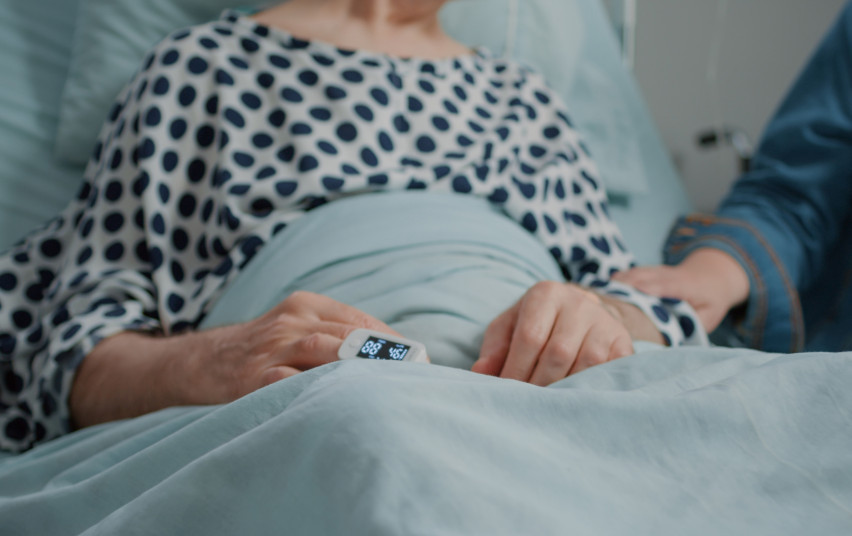
This year, the Ministry of Health will pay more attention to those with very rare diseases. Funding for the treatment of these diseases will increase, and decisions on reimbursement for medical treatment will be taken faster and more efficiently. The changes will enable more patients to benefit from state support more quickly.
According to the Vice Minister of Health, Danguolė Jankauskienė, the treatment of very rare diseases has not been given enough attention a trend that has persisted for several decades, which is why reforms have been introduced to consistently improve the situation of patients and their relatives.
“Often when we talk about very rare diseases, we refer to cases in other countries, where a higher proportion of patients with very rare diseases can benefit from both treatment and reimbursement of medicines. It is often forgotten that health care funding in these countries is often two to three times higher than the funds allocated by Lithuanian taxpayers. However, in spite of the limited finances, the Ministry has taken the initiative to reorganize the processes that would improve the situation of patients with these diseases. The changes are linked to faster decision-making, greater access to medicines and additional funding,” the Vice Minister said.
Since 2017, funding for very rare diseases has already been increased 5 times - from EUR 4 million to EUR 20 million. This year alone, compared to 2022, reimbursement of medicinal products and medical aids for very rare diseases will increase by a third, from EUR 15.63 million to EUR 20.53 million, while the total budget of the Compulsory Health Insurance Fund (CHIF) is increasing by only 9.3%.
Amendments have also been made to the description of the procedure for taking decisions on the reimbursement of the costs of treatment for very rare human conditions, which will improve the work of the Commission for the Reimbursement of the Costs of Treatment for Very Rare Human Conditions by clarifying the form of the application for reimbursement of treatment, by distinguishing a simplified version of the form for repeated applications for continuation of the treatment, by clarifying the definition of an urgent case, and by improving the process of handling the case.
In order to use the budget of the CHIF more efficiently, the Negotiation Commission will, in all cases, act as a mediator in the negotiations with the manufacturers of medicinal products, where the cost of treating one patient with the medicinal product in question exceeds EUR 100 thousand per year.
A working group set up by the Ministry of Health to review the legal regulation and make proposals on how to further improve reimbursement procedures for the treatment of very rare human conditions will continue its activity in 2023.
In the future, there is a possibility that more medicines for very rare diseases could be added to the main list of reimbursed medicines, when a medicine is reimbursed for a whole group of patients rather than for a single patient. This would allow for a full evaluation of health technologies, including comparative effectiveness, clinical effectiveness and pharmacoeconomic analyses, and for medicines to be financed from a common budget for all reimbursable medicines.
A very rare human condition is a health disorder in which there is no more than 1 newly diagnosed case per 200 thousand people in Lithuania per year. Very rare conditions, which are largely genetic and incurable, are both difficult to diagnose and treat early and require extremely high costs.
In 2021, the total number of patients who received reimbursed treatment under the reimbursement scheme for very rare conditions was 287, including 110 new cases (138 patients under the age of 18, 125 patients aged 18-65, 24 patients aged 64 and older).
Press Office of Ministry of Health
The NHIF invites you:
- Read the most important news on Facebook: https://goo.gl/ML8SqJ
- See recent pictures on Instagram: https://goo.gl/tXvpXr
- Watch comprehensive and funny videos on Youtube: https://goo.gl/BPBep2
- Follow exclusive infographics and more in Flickr: https://goo.gl/Hsyhq4
Your questions are welcome by email[email protected]or phone: local (8 5) 232 2222, international +370 5 232 2222