

Long-term care services will help residents stay independent for longer
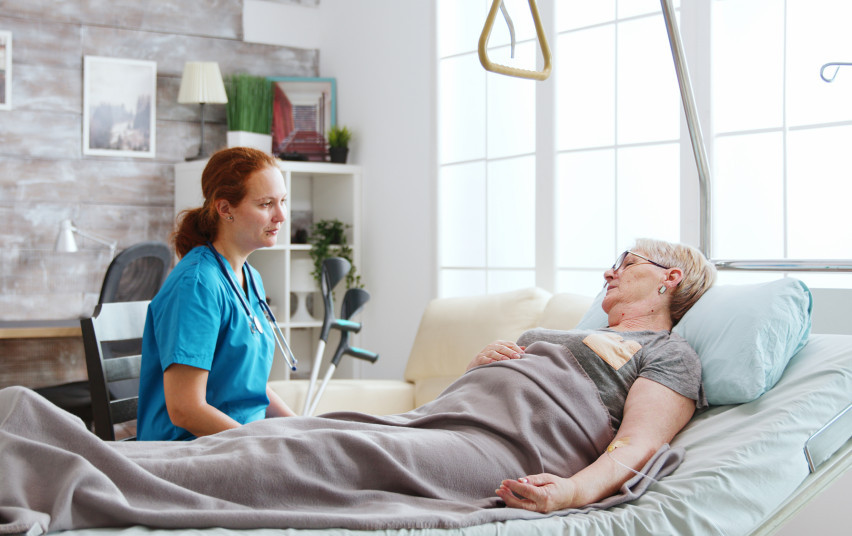
The society is ageing, younger people get sick, diseases become more serious – these and other reasons mean that more and more people face difficulties while taking care of their daily needs and taking part in society. Long-term care services, which join social and healthcare services, will help to stay active and independent for longer. Ministers of Health and Social Security and Labour have signed the order establishing the procedure and conditions for their provision.
“As society faces the challenges of ageing, a strategic and broad national approach towards meeting the needs of older people is necessary. Up to now, care services have been fragmented, they will be combined by offering not only comprehensive supervision to the residents, but also by ensuring their long-term vision”, says Arūnas Dulkys, Minister of Health.
The draft order on long-term care services was drawn by Ministry of Health in cooperation with the Ministry of Social Security and Labour. Systems of health and social security worked separately till now, services were provided and regulated individually, even though residents often need help for both health issues and vulnerable social position. Therefore, it was decided to join the processes of service provision so that residents could receive all the help needed from one source.
Long-term care model was designed to transform currently fragmented health and social services into high-quality, timely and continuous complex care that will help people in difficulty to live independently in the community for as long as possible, to avoid exacerbation of their illnesses, and to help their caring relatives to take a more active part in social life and labour market.
Considering individual needs, long-term care services will be provided in the outpatient (at home or in long-term care day centres) or by providing services in the inpatient, where not only health but also social care services will be developed. By expanding services and with increasing funding, healthcare institutions will be able to attract more healthcare specialists. Demand for them will grow not only in the cities but also in the regions.
Municipalities will organize the provision of long-term care services as they know the needs of their residents the best. More than EUR 100 million will be spent on the development of these services, which will go towards improving infrastructure and upgrading qualification of care specialists. The plan is to prepare programmes for qualification upgrading of nurses and to train 4 000 care specialists who will provide long-term care services. Seeking to ensure the quality of services, elements of long-term care, i.e. care and nursing of people with dementia, are planned to be included into the programme of nursing study programme.
To receive long-term care services, residents will have to go to their own health centre or municipality. There will be less bureaucracy, because people need to submit one application for receiving a complex care which combines healthcare and social services.
Approved Description of the Procedure for Provision of Long-term Care Services may be found HERE.
Ministry of Health reminds that in response to demographic changes and growing need for care, outpatient care services at home (OCSH) are also developed, their accessibility is increasing. The procedure for providing these services, updated last year, allows for quicker assessment of patients’ needs and timely provision of necessary services, and services are provided on the weekends. Residents with low need of OCSH can receive 52 services per year (one per week), with moderate need – 156 services (3 times per week), and those with high need – 260 services (5 times per week).
OCSH are healthcare services provided at a patient’s home seeking to ensure continuity of nursing services, to meet patient’s care needs at home and to promote self-care. Healthcare institutions providing all primary ambulatory healthcare services must ensure the provision of these services to registered residents (the institution itself may provide services or have a contract with another institution). Also, an institution providing OSCH may ensure assessment of the need for social services and provision of palliative help.
Information on who is eligible for OSCH and where to apply may be found on the website manoslauga.lt.
Communication Department of Ministry of Health
The NHIF invites you:
- Read the most important news on Facebook: https://goo.gl/ML8SqJ
- See recent pictures on Instagram: https://goo.gl/tXvpXr
- Watch comprehensive and funny videos on Youtube: https://goo.gl/BPBep2
- Follow exclusive infographics and more in Flickr: https://goo.gl/Hsyhq4
- Follow us on LinkedIn: https://tinyurl.com/2sxfh66j
- Your questions are welcome by email [email protected] or phone +370 5 232 2222