

Health insurance funds advise on shopping for medicine
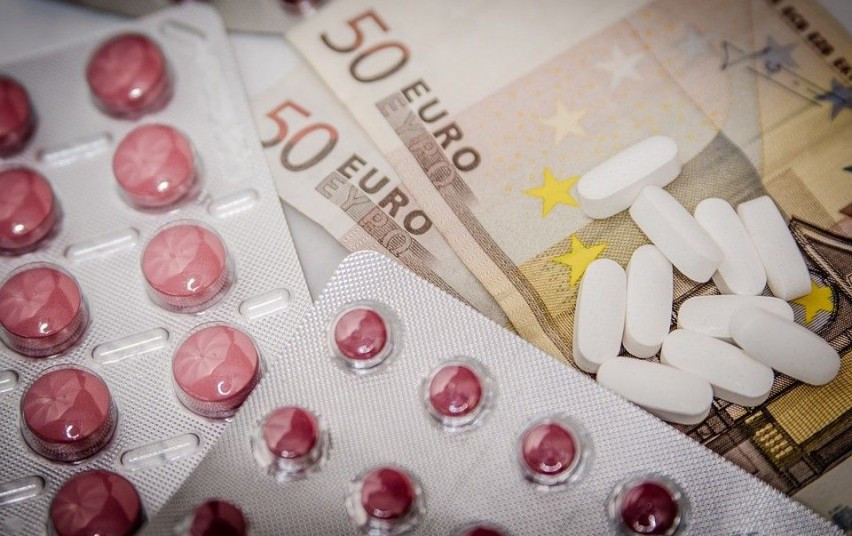
Health insurance funds were informed about cases, when residents, coming for reimbursed medicine for the smallest co-payment, are told that the pharmacy is out of stock, insisting on selling another, more expensive medicine. The National Health Insurance Fund under the Ministry of Health (NHIF) does not approve of such irrational dispense of medicine and would like to draw attention to patient rights and the procedure of selling medicine, which will help make a smart decision while visiting a pharmacy.
Pharmacies sell reimbursable medicine, which may be produced by various manufacturers, but contain the same active ingredients. The co-payments to be made by the residents may thus differ as well – sometimes they could be even double. Thus, first of all, all pharmacists must show each patient the list of all medicine that contains the same active ingredients or medical aids prescribed available. They must also show all of their prices and co-payments to be made by the patient. The medicine with the smallest co-payments are always shown on the top of the list.
If the pharmacy does not have the needed medicine or medical aid with the smallest co-payment, the pharmacist must suggest making an order with a delivery in 2 (in the city) to 4 (in rural areas) days.
‘We must realise that the pharmaceutical industry is making heavy investments to promote its products. Sometimes patients are offered more expensive medicine, because it is recommended by their physicians or pharmacists. These recommendations for more expensive medicine of the same therapeutic value instead of its cheaper equivalent of the same quality are likely based on the interests of the pharmaceutical market rather than a rational choice.’ says Irma Medžiaušaitė, Adviser of the NHIF Pharmaceuticals Reimbursement Division.
She says that physician prescriptions should only indicate the general title of the active ingredient. However, in some cases, physicians indicate a specific title of the medicine prescribed, which is not always the cheapest. Patients should be careful and exercise their right to pick the brand of medicine they prefer.
‘Cases of pharmacists being reluctant to offer the medicine with the smallest co-payment or ordering more in case the pharmacy is out of stock and attempting to trade another in its stead, should be immediately reported to territorial health insurance fund divisions.’ emphasized Medžiaušaitė.
Sometimes people pick more expensive medicine, based on the brand, on their own – unprompted by their physicians or pharmacists. Keeping in mind that the key is not the packaging or the pill colour, but the active ingredient, picking medicine with lower co-payments would be more cost-effective. This practice has been applied in other European countries as well, including Sweden, Norway, Denmark and others.
‘NHIF calculations and analysis of the use of medicine in Lithuania have shown that the total amount of co-payments, made by patients in 2021, was 17.6 million Eur. 15.7 million Eur of co-payments were covered from the Compulsory Health Insurance Fund. Thus, the total amount of co-payments was as much as 33.3 million Eur. These numbers could be smaller if people were not as willing to buy the most expensive medicine. Meanwhile, the funds saved could be used for other needs of their families.’ said the NHIF representative.
Nevertheless, patients that refuse to buy the suggested reimbursed medicine with the lowest co-payment can choose other brands of the generic medicine, indicated in the prescription, and make the appropriate co-payment.
(Piktochart photo)
The NHIF invites you:
- Read the most important news on Facebook: https://goo.gl/ML8SqJ
- See recent pictures on Instagram: https://goo.gl/tXvpXr
- Watch comprehensive and funny videos on Youtube: https://goo.gl/BPBep2
- Follow exclusive infographics and more in Flickr: https://goo.gl/Hsyhq4
Your questions are welcome by email [email protected] or phone: local (8 5) 232 2222, international +370 5 232 222