

Experiment of the health insurance funds: how many euros did patients waste last year?
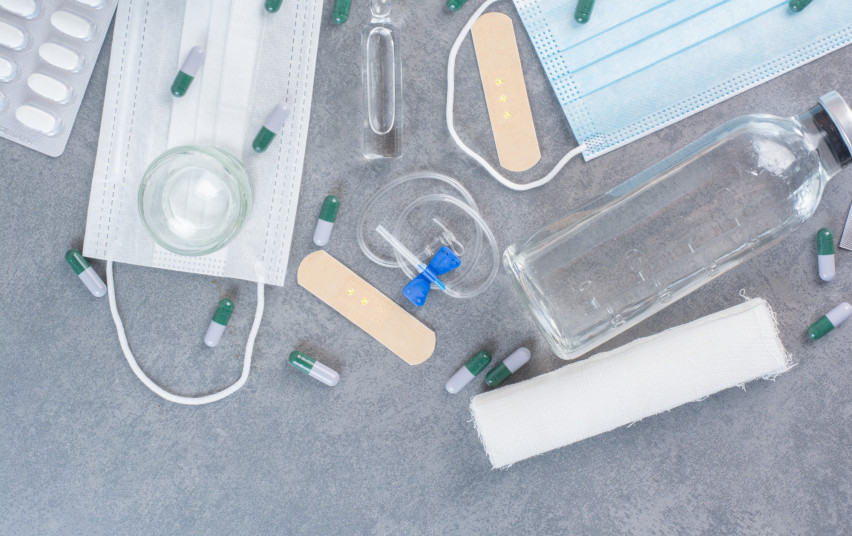
Nearly 28 tonnes of outdated or no longer useful medicines were collected from citizens last year. That's 2 tonnes less pharmaceutical waste than pharmacies collected the previous year. According to the specialists of the National Health Insurance Fund, these numbers not only indicate a more conscious attitude of the public towards the importance of saving the environment, but also a more responsible purchase and use of medicines. However, how much would we have saved if we had used all medicines rationally?
Buying more, throwing away less
The statistics of unused medicines returned to pharmacies, measured in tens of tonnes every year, show that the Lithuanian population has become used to being responsible and sorting pharmaceutical waste - they no longer throw unused medicines in the trash or pour them down the drain, but bring them to pharmacies. Disposing of outdated medicines accumulated at home in this way not only prevents poisoning of children or animals, but also protects the soil and groundwater.
According to the analysis carried out by the National Health Insurance Fund under the Ministry of Health (NHIF), 73 thousand more patients purchased reimbursable medicines and medical aids in pharmacies last year than the year before. As pharmaceutical waste collection last year was significantly lower than two years ago, it is likely that more patients purchased and used medicines properly, both as prescribed by doctors and as advised by pharmacists.
“So far, we have seen year-on-year increases in the rate of medicines returned to pharmacies. The amount of medicines collected has doubled in five years. The year before last was a peak year, with an estimated 30 tonnes of no longer useful medicines brought to pharmacies by people. While we were happy about the environment, however, we were also concerned about the irrationality of prescribing and purchasing medicines. We hope that the fact that the amount of medicines returned last year was even 2 tonnes less is a good sign that the population has started to use medicines more rationally, i.e., more patients purchased and used medicines in moderation – only as much as necessary”, – says Irma Medžiaušaitė, Advisor of the Pharmaceuticals Reimbursement Division of the NHIF.
Loss of millions
Despite the fact that the number of medicines returned decreased last year, it remained impressive. The NHIF has calculated that 28 tonnes of medicines returned to pharmacies by the citizens have been converted into a monetary value.
NHIF experts have estimated that the average weight of a 10-pack of different medicines is around 250 g, which means that 28 tonnes of pharmaceutical waste could amount to around 112,000 packs. The average reimbursement amount for a single package of different medicines in 2022 was EUR 19, so if we calculate that all the wasted medicines last year were reimbursable medicines, this would mean that the Compulsory Health Insurance Fund (CHIF) paid around EUR 2.13 million for medicines not consumed by patients. These funds could be used to target the treatment of patients by reimbursing healthcare services and new medicines.
“Based on this assumption, we can be pleased that the population saved about 152,000 euros last year by using medicines in a more rational way, when 2 tonnes less of them were thrown away,” says I. Medžiaušaitė.
We use medicines rationally when there is nothing left to throw away
The Health Insurance Fund reminds patients that rational use of medicines means that the patient receives the right medicines for his or her individual needs, in the right doses, for the right duration and at the lowest possible cost. This process involves both the prescribing doctor and the patient taking the medicines.
When prescribing a new reimbursable medicine for the first time, a doctor is only allowed to prescribe it for 10 days if the illness is acute, and for a one-month course of treatment otherwise. Only when the patient is satisfied that the medicine is suitable, safe, and effective can it be prescribed for a longer course of treatment – up to 3 or 6 months.
“Both the World Health Organisation and Lithuanian doctors and health experts constantly remind us that medicines should be taken responsibly, in moderation and in consultation with a doctor and pharmacist. However, many people disregard their doctor's advice and buy and use medicines at their own discretion, often buying more than they really need, even for the first time, especially if they are discounted. If patients bought and used medicines rationally, and doctors prescribed them properly, pharmacies would not have to return anything and people would save money for other needs,” believes I. Medžiaušaitė.
How to properly dispose of unnecessary medicines?
It is important to know that people can bring all outdated and no longer useful medicines to any pharmacy. They must be accepted free of charge. If a pharmacy refuses to accept outdated medicines from people, the State Medicines Control Agency under the Ministry of Health must be informed.
Medical aids, including syringes, are also considered hazardous medical waste and should not be disposed of anywhere. If syringes are used in patients' homes by medical staff, they must be collected by them after they have provided the service. The same applies to drips, used gloves and other waste, which must be disposed of by medical personnel. In the case of self-administered medicines, people can take the syringes they have collected to their municipal bulky waste collection sites free of charge. These sites also accept medical thermometers.
Outdated or unnecessary food supplements can be disposed of in mixed municipal waste containers, as a food supplement is not a medicine and does not harm the environment. In contrast, vitamins that can be classified as medicines are accepted by pharmacies and if they are not, then they should be disposed of in mixed municipal waste containers.
(Freepik photo)
The NHIF invites you:
- Read the most important news on Facebook: https://goo.gl/ML8SqJ
- See recent pictures on Instagram: https://goo.gl/tXvpXr
- Watch comprehensive and funny videos on Youtube: https://goo.gl/BPBep2
- Follow exclusive infographics and more in Flickr: https://goo.gl/Hsyhq4