

Encourages to take care of one‘s oral health
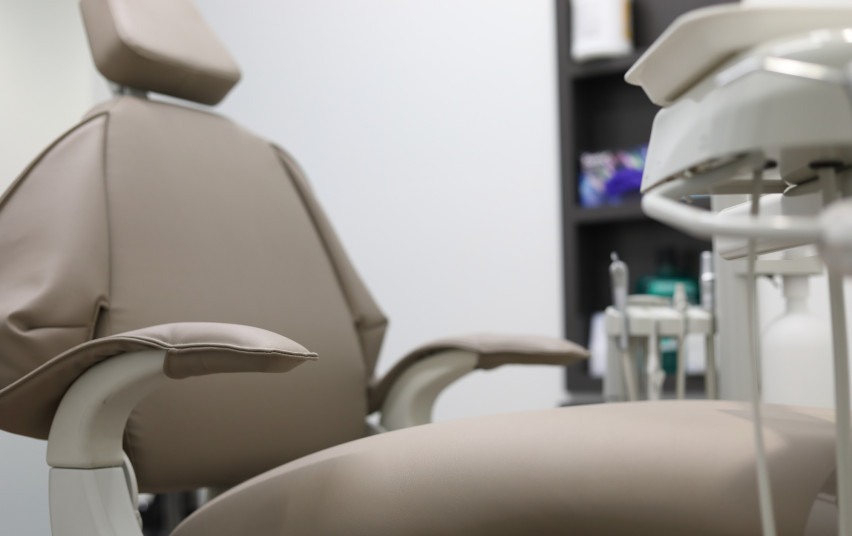
On 20 March, World Oral Health Day, the health insurance funds and medical professionals invite people to take a more serious approach towards their oral health - to practice professional oral hygiene, to have regular preventive dental check-ups, and to treat toothaches without undue delay.
Oral health is determined by responsible attitude
Santa Miežinienė, an expert in dentistry at the Ministry of Health, a member of the Council at Lithuanian Dental Chamber, and acting director of the Panevėžys City Dental Clinic, notes that in Panevėžys, for example, the attitude towards oral health of people of working-age is slowly changing for the better, as they tend to pay visits the dentist's on time more often. However, in many cases, both children's and adults' mouths are not being taken care of properly, which often leads to serious consequences later.
“Panevėžys City Dental Clinic started the year 2023 with disappointing news - an adult patient was diagnosed with oral cancer. The patient had suspicions and received help before, but did not seek further treatment himself, as he did not consider it to be a serious threat. But now the diagnosis is clear”, remembers the dental expert.
According to S. Miežinienė, the residents of the country have many different oral problems. There would be far fewer of these if people took more responsibility for their oral hygiene, checked their teeth preventively and, if their teeth became painful, came in for treatment on time. When it comes to treating not only the surface of the tooth, but also the canals, treatment is both more expensive and takes longer.
To raise a generation without caries – mission impossible
“Parents tend to take care of their children's heads, ears, and nails but forget about their children's oral hygiene. Indeed, it is necessary to develop a habit to inspect child's mouth from the very moment they are born, brush their teeth until they are 7-9 years old as children of younger age are unable to brush their teeth properly on their own”, says S. Miežinienė. “If we got used to taking children to the dentist's twice a year, and took care of their oral hygiene responsibly, I believe we could raise a generation without tooth caries in Lithuania. To add to this, the costs of dental treatment would be lower“.
The dental expert draws attention to the placement of sealants on children's wisdom teeth, which she considers to be a good anti-cavity measure. She recalls a recent case of a 29-year-old patient whose healthy wisdom tooth was still being protected by sealants.
The health insurance funds remind children that healthy permanent wisdom teeth can be covered with sealants from the eruption of the first permanent wisdom teeth until the child turns 14. These are tooth decay-preventing materials that mechanically cover the grooves and hollows of the teeth in order to prevent the bacteria that cause tooth decay from entering them. The procedure is performed at medical institutions that have concluded agreements with the territorial health insurance fund for the provision of dental care services or for the provision of and payment for dental sealant service to children. This procedure is performed by dentists with assistants or dental hygienists.
What do the health insurance funds pay for?
In addition to application of sealants, primary dentistry includes a full range of non-specialized personal health care services: treatment of dental caries, pulpitis, some types of periodontitis, removal of tartar, tooth and tooth root extraction, determination of the likelihood of pre-cancerous diseases, detection and prevention of occlusal anomalies, the placement of temporary splints for the treatment of traumatic teeth injuries, etc.
It is important to know that the health insurance funds pay for the doctor's work, while the patient shall, according to the amount of materials and supplies used and the cost of purchasing them, pay for the medicines, dental filling, or other dental materials and disposables.
Children, pupils attending full-time general education schools, full-time vocational schools until they turn 24, and socially disadvantaged persons are exempted and do not have to pay for the service (having submitted a certificate from the division of social support of the municipality of residence), unless the patient (or his/her representative) wishes and chooses more expensive materials, supplies, or other additional services (i.e., not necessary for the diagnosis or treatment of the underlying disease), in which case he/she has to pay for these services himself/herself.
More information on all dental services can be found here.
(Pexels photo)
The NHIF invites you:
- Read the most important news on Facebook: https://goo.gl/ML8SqJ
- See recent pictures on Instagram: https://goo.gl/tXvpXr
- Watch comprehensive and funny videos on Youtube: https://goo.gl/BPBep2
- Follow exclusive infographics and more in Flickr: https://goo.gl/Hsyhq4