

Common medication mistakes – how to avoid them?
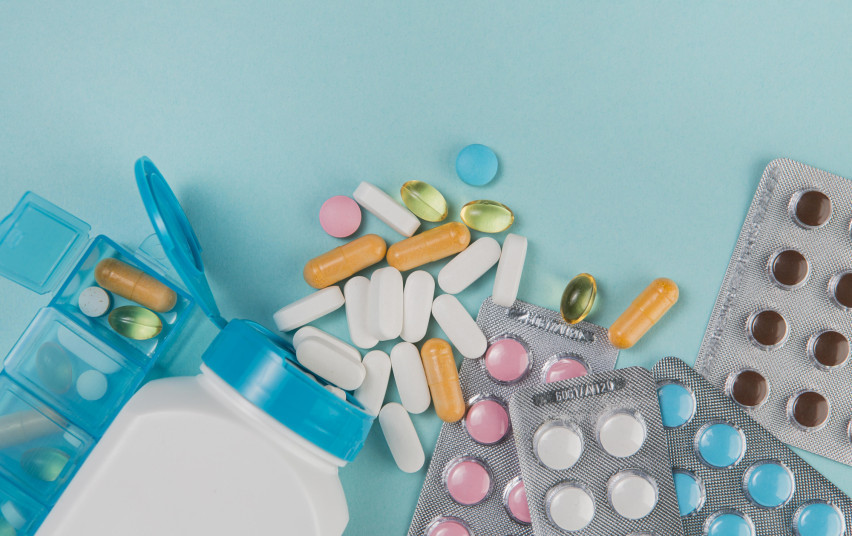
According to the data of World Health Organization (WHO), more than 50 pct. of medications are inappropriately prescribed, dispensed or sold, and 50 pct. of patients use them improperly. Quite often people are unaware or deliberately use medications not following doctor’s orders, thus, the Ministry of Health (MH) reminds that irrational use of medications may lead to negative consequences and highlights the most common mistakes made by patients.
“Adherence to a medication regimen is an important skill, allowing the patient remain independent, and, most significantly, helping to achieve desired treatment outcome and avoid adverse reactions to medications. Unfortunately, some patients fail to use medications properly, therefore, the Ministry takes the initiative to inform the public and to raise awareness about rational use of medicines, the importance of adherence to a treatment regimen and health risks of inappropriate use of medicines”, says Anželika Oraitė, Director of Pharmaceutical Policy Department of the Ministry of Health.
Seeking to disseminate the principles of rational use of medications as widely as possible, MH is currently implementing the project Wise List of
Medicines, which has produced a publication for the public on the rational use of medications.
The most common mistakes:
1. Purchasing medications and other products of uncertain origin in illegal places.
Residents acquire medications in markets, illegal websites, get them from neighbours and friends. The risk is to purchase and use products of uncertain origin, which are presented as medications. The use of these products is unsafe. Medications shall be purchased in pharmacies when going there or purchasing online. A pharmaceutical service (consultation) is provided to the patient when he purchases medicines.
When purchasing medicines online, it is necessary to draw attention to the fact that the website of a pharmacy offering the sale of a medical product at a distance must clearly display the common logo of the design established by the European Commission, which is recognisable throughout the European Union (EU).
2. Failing to follow doctor’s orders when using prescribed medicines.
Taking too high or too low a dose of a medication prescribed by a doctor, taking medicines for too short period of time or not following instructions given by your doctor or presented on the package leaflet (before, during or after meals) – incorrect use of medications may change (even weaken sometimes) the effect of the medicines. When a doctor prescribes medications, the patient must inform him about diagnosed diseases, former allergic and other adverse reactions (side effects), if there were any.
Quite often patients change the form of the medicine: tablets are grinded, dissolved in food, when they are not suited for this, injection solutions or suppositories are tried to be swallowed. Such use will not provide desired results, it may cause significant health disorders.
3. Improper use of antibiotics: failing to follow doses indicated by a doctor or in case of non-bacterial infections.
Antibiotics are only prescribed to treat infections of bacterial origin and can only be prescribed by a doctor. It is very important to follow all doctor’s instructions when taking antibiotics (must be taken at the frequency and for the course of treatment prescribed by the doctor, etc.). Rationally prescribed and used antibiotics prevent the spread of new antibiotic-resistant micro-organisms in the society.
4. Failure to assess interaction of medications or inappropriate concomitant use of medicines and foods.
Some medicines interact significantly when taken with other medicines, alcohol or foods. Tell your doctor or pharmacist about all medicines, including over-the-counter medicines, and food supplements that you take. Let them assess interaction of the medicines and, if necessary, foods you take.
5. Improper storage and handling of medicines.
Medicines should be stored in their original packaging, under conditions specified by the manufacturer on the packaging and on the package leaflet. Blister packs should not be cut. If a pharmaceutical form of a medical product is a solution or a suspension, it should normally be consumed within a relatively short period of time (indicated on the package leaflet) after opening.
Keeping unnecessary or expired medicines at home increases the risk of poisoning. To protect not only ourselves but also our environment, please bring unnecessary or expired medicines to pharmacies, which will pass them on to waste management companies.
Publication “Rational Use of Medicines” is aimed at people in Lithuania, who take medicines prescribed by a doctor or self-medicate (or consult a pharmacist) with over-the-counter medicines, as well as family members or other relatives caring for patients. The publication aims to provide knowledge on the rational use of medicines and to help the public (patients) to better understand characteristics of the use and combination of medicines.
Ministry of Health Communication Department
The NHIF invites you:
- Read the most important news on Facebook: https://goo.gl/ML8SqJ
- See recent pictures on Instagram: https://goo.gl/tXvpXr
- Watch comprehensive and funny videos on Youtube: https://goo.gl/BPBep2
- Follow exclusive infographics and more in Flickr: https://goo.gl/Hsyhq4
- Follow us on LinkedIn: https://tinyurl.com/2sxfh66j
- Your questions are welcome by email [email protected] or phone +370 5 232 2222