

Aspects of emergency aid: polyclinic or hospital?
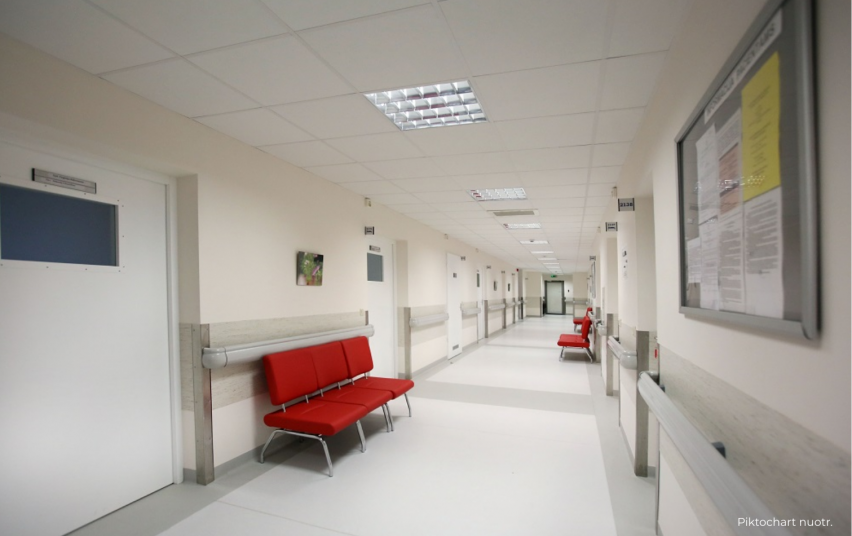
The health insurance funds often receive questions, why patients are required to pay for the medical aid, received at an emergency room at a hospital. Medics and the health insurance funds experts urge the residents to think twice before going to a hospital post-working hours of their general physician, and consider, if a patient really needs emergency aid, or if the services of an on-call physician of a polyclinic would do. This would prevent not only unwanted payments for unnecessary emergency care, provided the hospital, but also crowded reception department corridors.
General physician services are available 24 hours a day
‘Each polyclinic or family health centre must ensure seamless provision of medical services for all persons registered with the institution and covered by the compulsory health insurance (CHI). This means that patients must always have where to go, no matter when they are in need - on a regular day, on weekend, after working hours or during holidays.’ says Oksana Burokienė, Head Expert of the Services Management Division at the National Health Insurance Fund (NHIF) under the Ministry of Health of the Republic of Lithuania.
Patients often get confused by the fact that not all polyclinics or family health care centres offer seamless services on their own. Some of them have signed agreements with other health care institutions. Thus, residents should find out, where they are supposed to go for medical services, when the health care institution that they are registered with, is closed.
This information is available from a general physician or the reception. Each health care institution should also place this information on their information boards and websites. Another convenient method of finding out where to go after hours is visiting the website of the Health Insurance Fund. It contains and keeps updating information on health care institutions all over the country and the services they offer.
Polyclinic and family health care centres keep increasingly reminding their patients that, in case of acute illness after hours, they can receive help from on-call physicians according to the family medicine standard. Upon evaluating the condition of the patient's health, if needed, the on-call physician, will call for an ambulance, while transcripts of the services, provided by the on-call physician, will be transferred to the treatment institution of the person's general physician. Meanwhile, all questions regarding treatment and testing control, also planned and preventive health examinations, should be addressed to general physicians on their working hours.
Thus, patients should contact an on-call physician only in case of acute illness. For example, if they encounter severe headache or stomach pain, fever, nausea, can't control their blood pressure with conventional medication, experience dyspnoea, etc. However, patients should always be reasonable and consider if the assistance is needed as fast as possible, or it could wait until conventional working hours. For example, prescription medicine can be prescribed by booking a visit with the general physician in advance. This is the only way to prevent long queues in the waiting room, while the services of an on-call physician can be provided faster.
Up to 30 per cent of emergences aren't really emergencies
Medics, working at hospital emergency rooms notice that patients often tend to abuse hospital services. That is, they come for services that can be provided by a general or on-call physician, rather than emergency aid. This results in long queues in the waiting room, because the ER always prioritises patients with the most difficult conditions.
Some Lithuanian hospitals calculate that 20-30 per cent of the cases brought to the emergency room aren't really emergencies and patients are merely worried about minor health issues.
‘The decision, whether the situation is an emergency, is made by the physician upon examining the patient. Should he or she decide that the ailment does not pose any threat to the patient’s life or is unlikely to result in any complications, the patient is recommended to contact his or her general physician. That is why the patient may be asked to pay for the non-emergency services, provided at the emergency room.’ says Burokienė.
Patients may be required to pay in two cases. First, if patients come for the non-emergency services on their own and agree to wait until the services are provided. Second, if patients do not comply with the scale of emergency, determined by the examining physician – in such case patients may be provided only with paid services, as they should address their general physician, but prefer to be serviced at the emergency room.
It’s important to know that emergency aid must be provided immediately. However, when patients need planned care, rather than emergency care, they may be referred to their general or on-call physician. Health care institutions must inform patients on the opportunities for receiving services, covered by the health insurance funds.
When should you go to an emergency room?
Patients should go to the emergency room only, when there is an actual threat to the human health or life, for example, with severe injuries, burns, acute poisoning, or in case of a condition that could disrupt the vital functions of the body.
Of course, in case of emergencies, people should immediately call for an ambulance by dialling 112. For example, in case of a car accident, stroke or heart attack, lost consciousness, or in case of a condition, when the patient is unable to go to an emergency room by themselves or if there is no time.
Emergency aid refers to medical aid, provided immediately or with no delay, when acute clinical conditions pose threat to a patient’s life or that of the people around, or when failure to provide this aid on time may result in severe complications for the patient. The scale of emergency care has been approved by the order of the Minister of Health. In all other cases, patients are urged to contact their general physicians and, after hours, on-call physicians.
The health insurance funds are kindly reminding that all health care institutions must provide emergency aid free of charge for all Lithuanian residents – both with and without CHI coverage. Moreover, it must be provided in any part of the country, regardless of the patient’s place of residence. For example, a patient, registered and treated in Kaunas, could have an accident while visiting Druskininkai, and thus address both a hospital or an on-call polyclinic for emergency aid.
(Piktochart pict.)
The NHIF invites you:
- Read the most important news on Facebook: https://goo.gl/ML8SqJ
- See recent pictures on Instagram: https://goo.gl/tXvpXr
- Watch comprehensive and funny videos on Youtube: https://goo.gl/BPBep2
- Follow exclusive infographics and more in Flickr: https://goo.gl/Hsyhq4
Your questions are welcome by email [email protected] or phone: local (8 5) 232 2222, international +370 5 232 222