

Almost 50 tons of unnecessary medicines: what does the growing amount of pharmaceutical waste in Lithuania indicate?
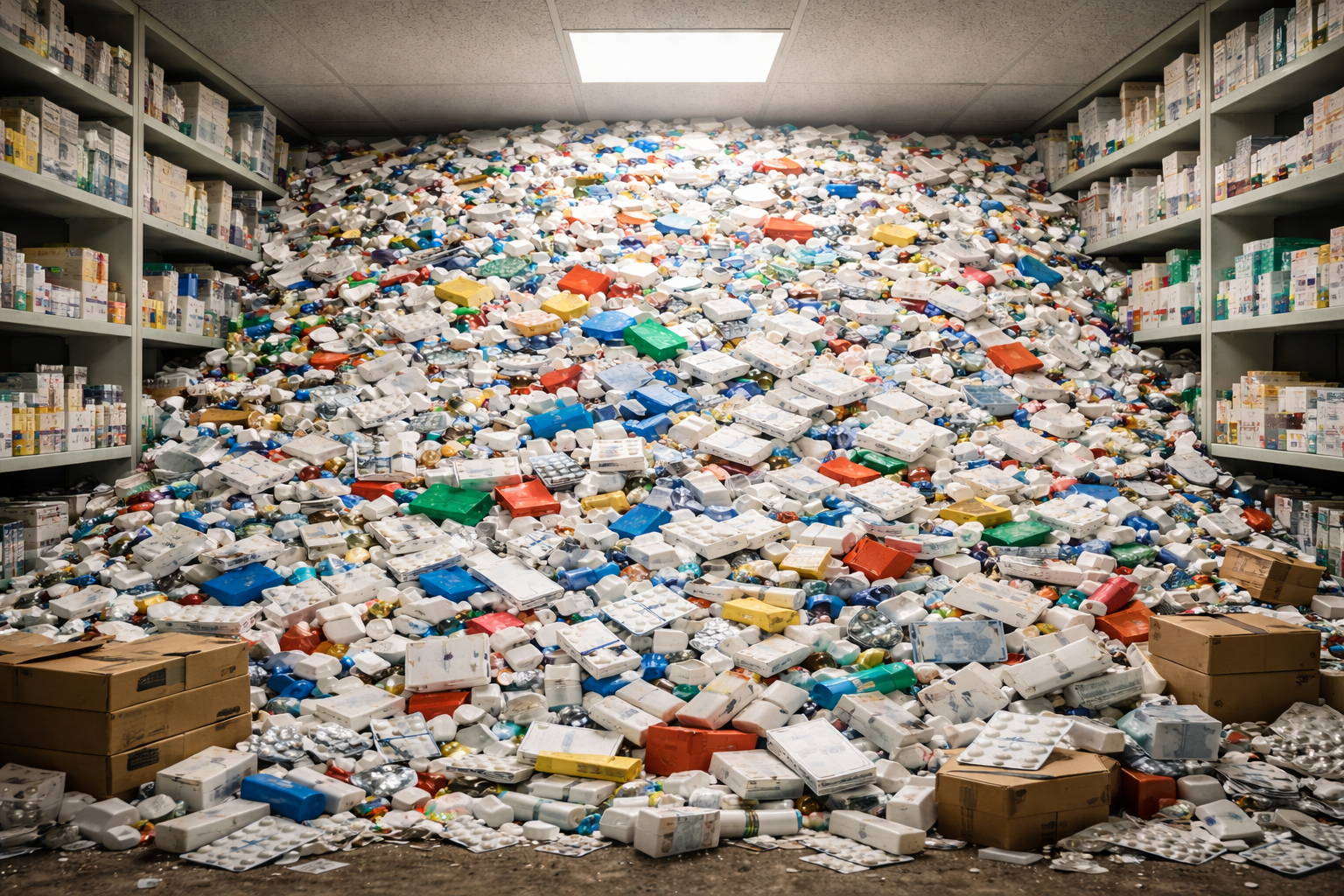
Last year, Lithuanian residents returned more than 47.4 tons of expired or unused medicines to pharmacies. This is the largest amount of pharmaceutical waste recorded in a single year to date. The growing figures show increasing awareness among residents, but at the same time raise questions about the rationality of prescribing, purchasing, and consuming medicines.
“The amount of pharmaceutical waste in Lithuania has been steadily increasing, and in recent years, it has been growing particularly rapidly. Last year, pharmacies collected almost 12 tons more medicines than the year before and almost four times more than, for example, nine years ago. Now, in just a few months, pharmacies collect as much pharmaceutical waste as they used to collect in a whole year. This shows that returning medicines has become common practice, but it also reveals that medicines are still being purchased without careful consideration. If medicines were prescribed, purchased, and used more rationally, a large part of this waste would simply not be generated,” says Lina Škiudaitė, acting head of the Rational Use of Pharmaceuticals Division at the National Health Insurance Fund (NHIF).
It is difficult to imagine such a quantity of medicines, but 47.4 tons of pharmaceutical waste could fill several medium-sized rooms, for example, if the medicines were stacked from floor to ceiling. It is even more difficult to accurately assess the financial value of such waste, but if we assume that the average price of one kilogram of medicines is around EUR 200, the medicines returned by residents last year could be worth close to EUR 10 million. Part of these funds are the patients’ own expenses, and part are from the Compulsory Health Insurance Fund, i.e., all taxpayers’ money, so irrational use of medicines has a direct financial impact on the entire healthcare system. These are funds that could have been used purposefully to treat patients, compensate for healthcare services, or purchase new medicines.
L. Škiudaitė emphasizes that rational use of medicines begins with proper treatment planning. When prescribing a reimbursable medicine for the first time, the doctor can only prescribe it for a shorter period – up to 10 days in the case of acute illnesses, and one month in other cases. Only after making sure that the medicine is suitable and safe for the patient can the prescription be extended for a longer period – up to 3 or 6 months. This helps avoid situations where unsuitable or unused medicines accumulate at home.
The updated rules for writing prescriptions and dispensing medicines and medical aids, which came into force last November, could also help to reduce the amount of pharmaceutical waste generated. One of the significant changes is the possibility for patients to purchase medicines or medical aids in instalments. This means that it is not necessary to purchase the entire quantity of medication specified in the prescription at once—after purchasing part of the medication, the remainder can be collected later at any pharmacy until the prescription expires. This procedure allows patients to better assess whether the medicine is really suitable for them and reduces the risk of unused medicines being left at home.
Another important innovation is prescriptions marked “as needed,” which are valid for up to six months and can be used at any time when symptoms for which the medication was prescribed and dispensed occur. Such prescriptions are particularly relevant for patients who experience certain ailments periodically, such as migraines or other episodic pain. In such cases, it is no longer necessary to keep a constant supply of medication at home, which may later become waste.
“These changes provide more flexibility for both patients and doctors, but at the same time encourage them to act responsibly. Medicines should not be purchased "just in case." The more precisely treatment is planned and the more responsibly medicines are used, the less waste there will be,” emphasizes L. Škiudaitė.
The NHIF would like to remind everyone that expired or unused medicines should not be thrown away in the trash or poured down the drain. They must be returned to pharmacies free of charge and transferred for safe disposal. This is the only proper way to protect the environment and prevent possible poisoning.
For more information on how to properly dispose of pharmaceutical waste, click here.
The NHIF invites you:
- Read the most important news on Facebook: https://goo.gl/ML8SqJ
- See recent pictures on Instagram: https://goo.gl/tXvpXr
- Watch videos on Youtube: https://goo.gl/BPBep2
- Follow exclusive infographics and more in Flickr: https://goo.gl/Hsyhq4
- Follow us on LinkedIn: https://tinyurl.com/2sxfh66j
- Your questions are welcome by email [email protected] or phone +370 5 232 2222