

Access to nursing care services is increasing: what can patients expect?
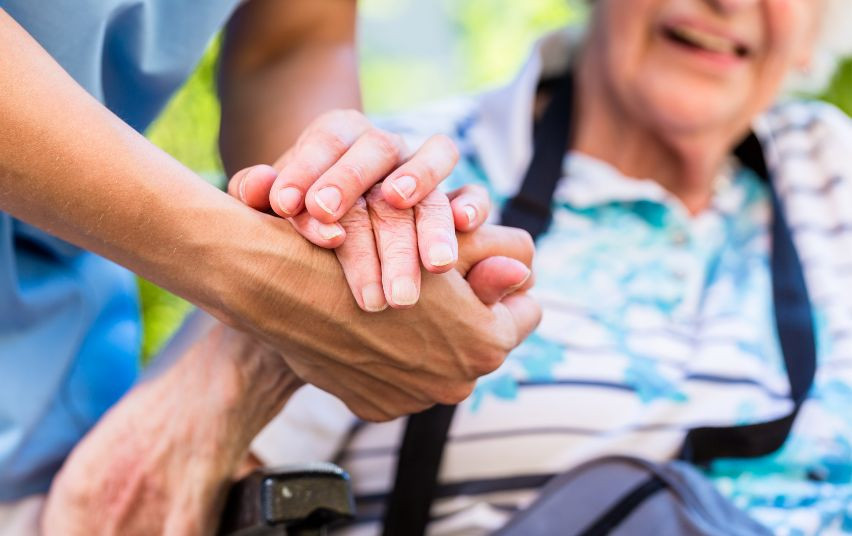
Due to increasing need of nursing care services in Lithuania, the Ministry of Health (MOH) has initiated restructuring of long-term care, it aims at improving quality of nursing care services and ensuring better accessibility.
“In order to increase quality and volume of outpatient nursing care services at home, a team of specialists, providing nursing care services at home, has been expanded to include a nurse, a nursing assistant and a physiotherapist. An occupational therapist is planned to join the team in the near future. Until 2020, a nursing care service could be provided only by a nurse working with a general practitioner,” says Ilona Šakienė, the head of Nursing and Long-term Care Division of Personal Health Department of MOH.
Also, the scope of services reimbursed by the CHIF and the number of beneficiaries of nursing care services received at home have been increased. In 2020, 40,000 people benefited from the service and, in 2022, the number reached 50,500. Implemented changes will help people, who are struggling, to live independently longer and to avoid possible exacerbations of their diseases, as well as to ease daily routine of relatives who care for them.
Three types of nursing care services are provided in Lithuania
Nursing care services are provided to patients whose health condition requires permanent help from a healthcare specialist – a nurse or a nurse assistant. “It is established according to a special questionnaire by assessing the need for such services in a specific case. Nursing care is available to people at any age who have been identified as having such a need,” says Ilona Šakienė, a representative of MOH.
The healthcare system may offer several types of services for patients with the need of nursing care services: palliative treatment and nursing care, outpatient nursing at home and palliative nursing care.
Services of palliative treatment and nursing care are provided to people with chronic diseases and to the disabled, diagnosed without the need for active treatment and without the need for further tests. Also in cases when there is no possibility to provide necessary nursing services at patient's home. A referral for palliative and nursing care services to be provided at home is prescribed by an attending doctor.
Other type of services, i.e. outpatient nursing care at home, is provided by a team of healthcare specialists, which consists of a nurse, a nurse assistant and a physiotherapist. The aim of these services is to provide conditions for a person to live in a society independently as long as possible. Thus, person’s independence is preserved, exacerbation of a disease or progress of current symptoms is prevented. A referral for outpatient nursing services provided at home is prescribed by a patient’s family doctor.
Palliative help is nursing care services to the patients suffering from incurable progressing diseases. They are designed to improve the quality of life of a patient and his/her relatives, to alleviate physical and psychological suffering, and to help solve other psychosocial and spiritual problems. Services of palliative help may be provided at patient’s home, inpatient or day inpatient centres. A referral for palliative help services is prescribed by an attending physician.
I. Šakienė states that nursing care services are provided until a patient needs permanent care from a healthcare specialist. If an assessment of person’s health condition and care needs shows that intensive care from healthcare specialists is not necessary, a patient may receive outpatient care at home instead of palliative treatment and nursing care at hospital.
The most common questions patients ask: how long will it take and how much will it cost?
I. Šakienė states that the start of palliative treatment and nursing care services depends on the complexity of patient’s health condition (usually preferred for patients after active treatment) and employment of the healthcare provider. While waiting for palliative treatment and nursing care services, there is always a possibility to receive outpatient services at home.
When applying for outpatient nursing care services to be provided at home, the need for nursing care services is assessed immediately and a referral is prescribed. Outpatient nursing care services at home are provided by a subdivision of a primary health care institution or by another contracted institution.
If a patient receives nursing care at home, the first visit is made by a nurse within 1-5 working days. Urgent appointments are made within the first 24 hours and planned appointments within 1-5 working days.
I. Šakienė assured that there was no need to worry about the cost of nursing care, as everyone could use free nursing care: “120 days of hospitalisation for palliative treatment and nursing care are reimbursed annually from the budget of the Compulsory Health Insurance Fund. 52, 156 or 260 visits per year by a specialist team, depending on the identified need for nursing care, are reimbursed when providing outpatient nursing services at home. Until 2020, 24 services per year were reimbursed”.
Communication Department of Ministry of Health
The NHIF invites you:
- Read the most important news on Facebook: https://goo.gl/ML8SqJ
- See recent pictures on Instagram: https://goo.gl/tXvpXr
- Watch videos on Youtube: https://goo.gl/BPBep2
- Follow exclusive infographics and more in Flickr: https://goo.gl/Hsyhq4
- Follow us on LinkedIn: https://tinyurl.com/2sxfh66j
- Your questions are welcome by email [email protected] or phone +370 5 232 2222