

A real life story: diagnosis of colorectal cancer is not the end of the world
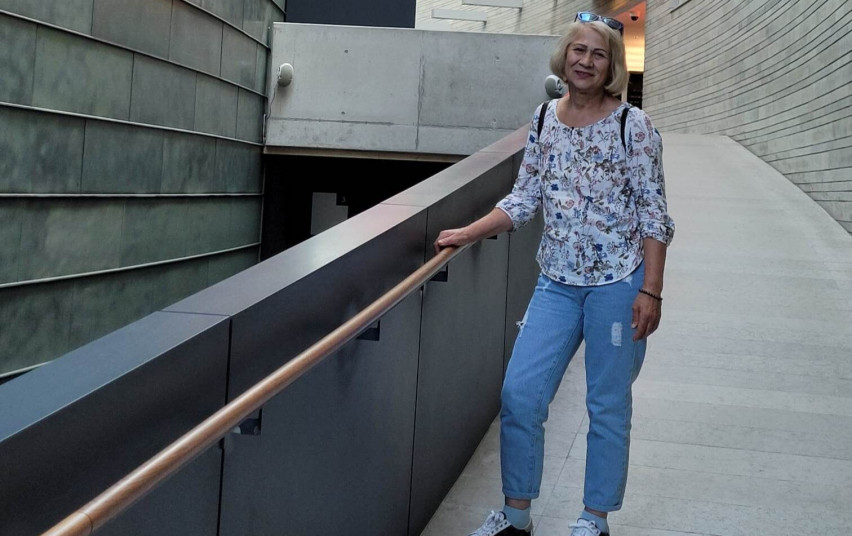
“I enjoy life, I go to various events, theatre, concerts, go hiking in nature, travel, volunteer with POLA and Eivena, organisations that help patients with oncological diseases,” says Marytė Klimienė, a 65-year-old woman from Kaunas, who overcame colorectal cancer ten years ago. She agreed to talk about the symptoms that gave the disease away, the path to recovery and what she would do differently if she could turn back time.
First signals
M. Klimienė was diagnosed with colorectal cancer in the winter of 2013 at the age of 55. The news was unexpected, although looking back, she says she felt a number of symptoms indicating that her body was undergoing changes and that she should pay more attention to herself. Her gynaecologist had also encouraged her to worry. “The first warning that something was wrong came from a gynaecologist in 2011, after a preventive check-up. She said she felt something during the screening, prescribed additional tests, performed an echoscopy, and even referred me to oncologists, but nothing was found. That’s how it all ended”, recalls M. Klimienė.
Later, the woman explains, she realised that she still needed to continue her examination, and not to go with the idea that “you're healthy if you're not in pain”. Two years later, in December, another symptom - a sudden severe pain in the anus that lasted just ten seconds and even knocked her down - did not prompt action either. “Until February, I didn't feel anything unusual. I was only worried when I started to defecate very frequently: as soon as I put something in my mouth, I immediately go to the toilet. Eventually, it started to interfere with my normal activities. I went to the doctor, had all the necessary examinations, and finally had a colonoscopy under general anaesthetic. It did not cause any unpleasant sensations, but the results were devastating - stage one colorectal cancer”, recalls M. Klimienė.
When life starts falling apart
The woman says she remembers the day she heard the life-changing news. She calls it a big setback, although she now looks back on it with a smile: “I was driving home from the clinic - there's this narrow, winding road that leads home. The darkest thoughts were weighing on my mind. Suddenly, I see a police car following me. Well, I think, I'm not speeding, they'll overtake me when they can. But suddenly the officers turn on their lights and stop me. They ask for my papers. I give them everything, but I can't find a duplicate of the roadworthiness certificate. After waiting a bit, the policeman says: “Don't bother looking for it, it's been invalid for two years anyway.” It turns out that they had already checked everything using the registration number of my car as a guide. That was the last straw, I couldn't take it anymore - I started to cry. The officer comforted me, telling me that there was nothing to be so upset about, it was just a small thing. It's a small thing to you, but my life is falling apart... Cancer, I reply. He felt sorry for me, gave me the smallest possible fine and wished me well.”
The next step was to tell the family about the diagnosis. According to M. Klimienė, there was no support. Although it was painful at the time, looking back now, she says she realises that it was what made her stronger, gave her the strength not to give up and seek help. “I realised that I would have to walk this path alone, I would have to overcome the disease on my own,” she says. “I had a good role model - my husband’s sister. When she got cancer, she put everything on the shelves, basically rearranged her life to make it as comfortable as possible for her and everyone around her. I decided I needed to do the same.” his is how the Lithuanian Cancer Patient Coalition (POLA), came into her life, not only providing comprehensive support, but also giving her the opportunity to engage in a wide range of activities to take her mind off her illness.
.jpg)
The most important thing is to not lose heart
After being diagnosed with colorectal cancer, the first thing she did was to have surgery. After examination of the removed tumour, the third stage of the disease was diagnosed - it appeared that the cancer had already spread to the lymph nodes through the bowel wall. “The operation went well. I was sent for rehabilitation afterwards: I needed the wound to heal, to regain my strength and to get stronger, because I still had a long chemotherapy treatment ahead of me. I had twelve courses of chemotherapy, first every three weeks, then every two weeks. I survived the chemotherapy treatment quite well, but I would never want to do it again.” - says M. Klimienė.
The woman believes that fate gives everyone as many challenges as they need and there is always a reason for it. “I have learned the lessons that were sent to me and now I am trying very hard to help others. I am a POLA Patient Guide - I help people with colorectal cancer. I also volunteer for Eivena an organisation for women facing cancer. When I was diagnosed with cancer, I got involved in these organisations, gaining a lot of knowledge, meeting lots of different people and making new friends. Unfortunately, some of the old ones have faded away”, says M. Klimienė.
When asked what she thinks is the reason for this, she answers without thinking that it is the stigma of oncological diseases that is still present in society. “As unbelievable as it may sound, many people are afraid of catching cancer because there is a lack of information on the subject, patients do not want to talk about it, and those around them do not know how to deal with it, how to approach the patients. That is why I am telling my story. I want everyone who has cancer to understand that nowadays, in most cases, the disease is curable. I encourage healthy people to take an interest in their own health, to trust their doctors, not to be afraid to go to specialists, to pay attention to the signals sent by the body, to take the necessary tests on time and to take part in prevention programmes,” she concludes the interview.
One in four people take part in a preventive programme
Colorectal cancer is one of the most common oncological diseases. According to the Institute of Hygiene, more than 6,200 people were diagnosed with this form of cancer in Lithuania last year and more than half a thousand patients lost their lives.
According to Rasa Valinskaitė-Barščevičienė, Head of the Population Services Division of Kaunas Territorial Health Insurance Fund, it is very important to detect the disease as early as possible, as this is when the treatment can be effective. This is what the early diagnosis programme for colorectal cancer is designed to achieve. “It started in 2009, first in Kaunas and Vilnius districts. Within a few years, the whole of Lithuania was included. Men and women aged 50-74 are invited for regular screening every 2 years,” says R. Valinskaitė-Barščevičienė. “During the visit, the family doctor informs the patient about the diagnosis of colorectal cancer, prescribes a faecal occult blood test and discusses the results. If positive, the patient is referred to a specialist, who prescribes a colonoscopy. If necessary, a biopsy is also taken.”
According to the National Health Insurance Fund, there is a slow uptake of screening for colorectal cancer. For example, only one in four of the more than one million people in the target age group took part in a colorectal cancer prevention programme last year. Thus, participation in the programme has not yet reached even pre-pandemic levels.
The health insurance funds point out that although this prevention programme is aimed at patients of a certain age, anyone who does not fall into this category but who experiences worrying symptoms and health problems should contact their family doctor. He or she will assess the patient’s condition, prescribe the necessary tests and, if necessary, refer the patient to a specialist.
Patients are also welcome to take part in free prostate, cervical, breast cancer and cardiovascular disease prevention programmes.
Information from Kaunas Territorial Health Insurance Fund
(Personal archive photo)
The NHIF invites you:
- Read the most important news on Facebook: https://goo.gl/ML8SqJ
- See recent pictures on Instagram: https://goo.gl/tXvpXr
- Watch comprehensive and funny videos on Youtube: https://goo.gl/BPBep2
- Follow exclusive infographics and more in Flickr: https://goo.gl/Hsyhq4
- Follow us on LinkedIn: https://tinyurl.com/2sxfh66j
- Your questions are welcome by email [email protected] or phone +370 5 232 2222